A species
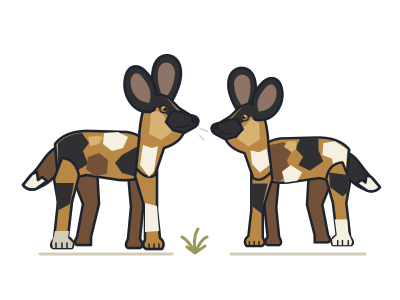
African wild dog
Lycaon pictus
A hunting trip may begin with a sneeze.
You and the african wild dog meet in the Placental mammals branch, shown at about 95 million years ago (on 23 December, in a calendar from life's shared ancestor to today).
Some African wild dog packs appear to vote by sneezing before setting off to hunt. In a study of five packs in Botswana, gatherings with more sneezes were more likely to end with the dogs leaving together. Before departure, the dogs greet one another energetically. But not every gathering leads to a hunting trip: sometimes they settle down again.
These hunters belong to the same family as pet dogs, wolves and foxes. Despite their rounded ears and patchy coats, they are not hyenas. Nor are they pet dogs that have gone wild: they are a separate wild species.
Pack life also means helping with the next generation. Adults help raise pups that are not their own, including guarding the den while other adults hunt. When pups begin visiting feeding sites, the adults let them eat first and keep watch for other predators.
One-of-a-kind coats
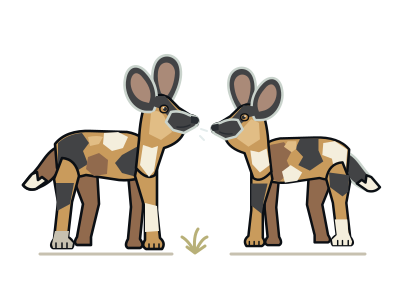
Each dog has its own pattern of black, brown and white patches.
Ears that help cool
Their large, rounded ears help them hear and lose heat.
Keeping in touch
Their sounds include high-pitched squeaks and a distinctive ‘hoo’ call used when separated.
Next to it on the tree
- DogA wolf that joined humans tens of thousands of years ago and learned to read our faces.


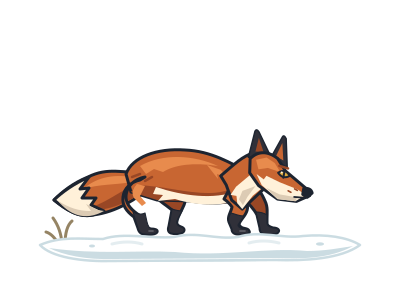
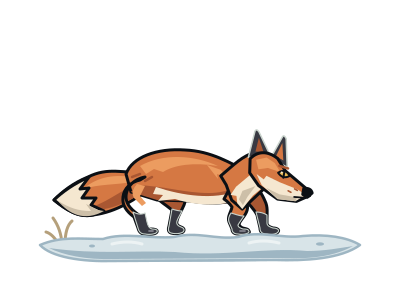
- Red foxPounces on mice under snow, possibly aiming with Earth's magnetic field.
- Dire wolfA heavy Ice Age dog relative with a distinct ancient history; newer DNA work suggests ancestry from two lineages.
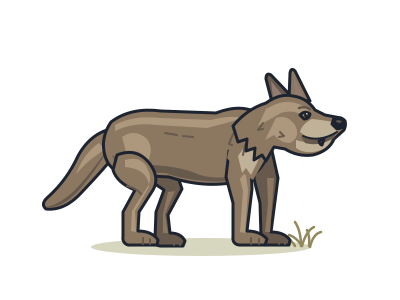
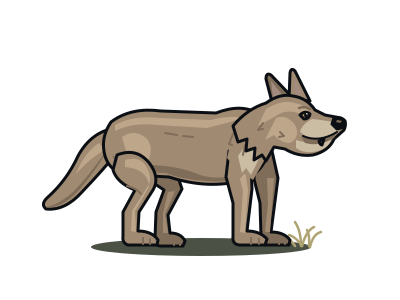
- Grey wolfHunts in family packs; every dog descends from an ancient grey wolf population that is now extinct.
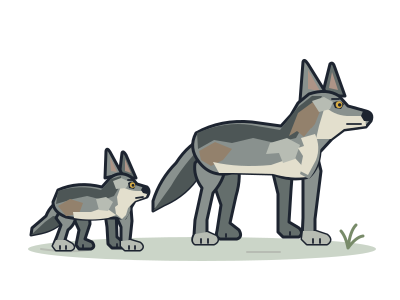
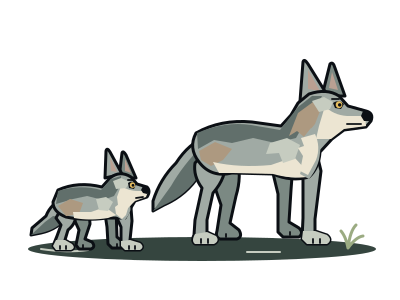
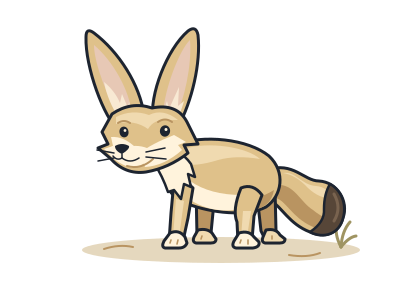
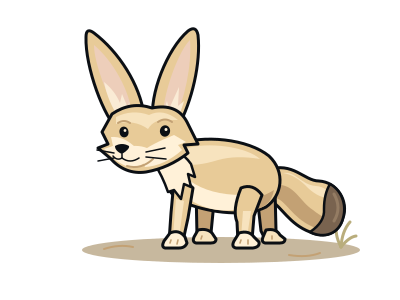
- Fennec foxThe smallest fox, with giant ears that shed desert heat.
- CoyoteA clever wild dog that has spread across North America and now lives in many big cities.
- Arctic foxA small fox whose coat turns white in winter and whose fur keeps it warm far below freezing.
- Maned wolfA fox-like dog on stilt legs from South American grasslands that eats a lot of fruit.