A species
Acid record-holder
Picrophilus torridus
The most acid-loving life known, living in steaming volcanic soil
You and the acid record-holder meet in the Archaea branch, shown at about 3.3 billion years ago (on 20 March, in a calendar from life's shared ancestor to today).
This tiny microbe holds a record: it is the most acid-loving life known. It grows best at about pH 0.7. Lemon juice is around pH 2 to 3, and each step down the pH scale means ten times more acid. So its favourite home is more than ten times as acidic as lemon juice. It can even grow close to pH 0.
It is not a bacterium. It belongs to the archaea, a separate branch of single-celled life. On this tree it shares a big archaea group with very different neighbours: a methane-maker that lives in human guts, salt-loving archaea and a microbe that holds the record for heat. Its closest relatives are other acid-loving archaea.
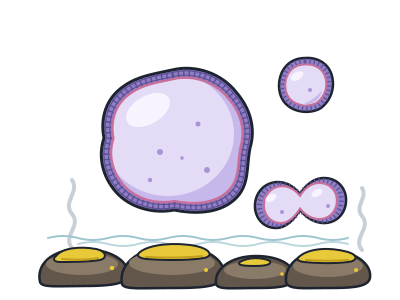
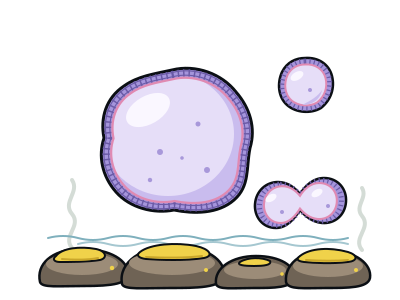
It was first found in dry, steaming soil around volcanic gas vents on Hokkaido, in northern Japan. One spot had soil warmed to about 55°C. That is about as hot as very hot tap water, but well below boiling. Its record is for acid, not heat.
This microbe doesn't just put up with acid. It needs it. Above about pH 4, which is still mildly acidic, the thin membrane around the cell starts to leak and the cell bursts.
Acid as a battery
It uses the strong acid around it as a power source. Many of the gateways that bring food into the cell are driven by acid trickling in from outside, rather than by the cell's main energy molecule.
A tiny instruction book
Its DNA holds instructions for only about 1,500 proteins. When it was read in 2004, it was the smallest known for a free-living microbe that breathes oxygen and eats ready-made food. About 92% of its DNA holds instructions for making proteins.
A lacy coat
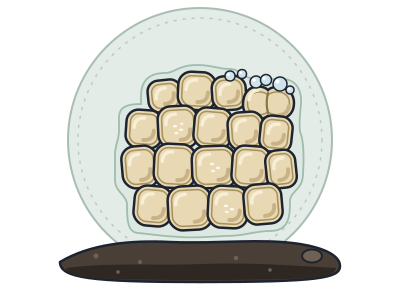
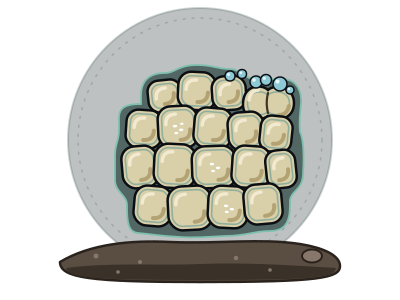
Each cell is wrapped in a fine, square-grid lattice of protein, like woven lace. Some of its close acid-loving relatives, such as Thermoplasma, have no cell wall at all.
Next to it on the tree
- Gut methane-makerAn archaeon living in most human guts that turns hydrogen into methane.
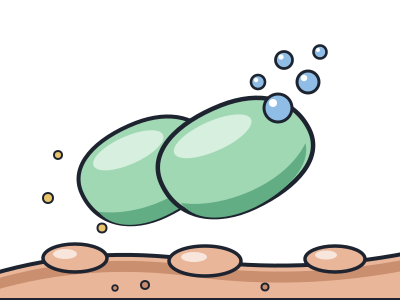
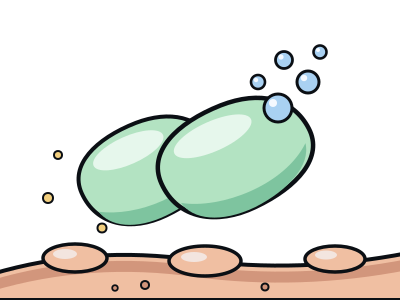
- Salt-loving archaeaArchaea that turn salt ponds pink and live in brine ten times saltier than the sea.
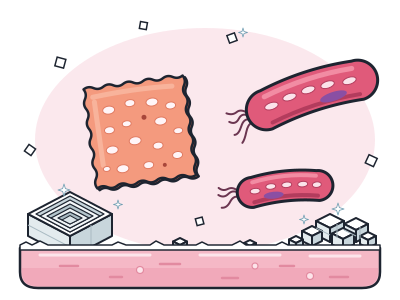
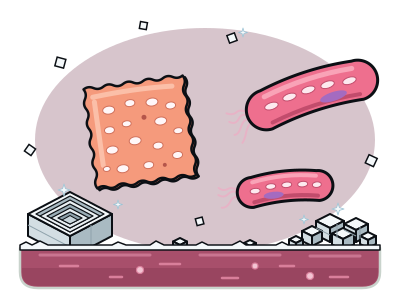
- Rushing fireballIts name means rushing fireball: it doubles every 37 minutes at 100 °C beside volcanic vents.
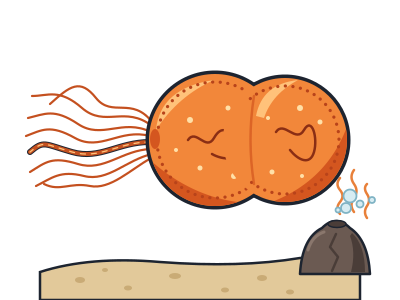
- Heat record-holderHolds the heat record for life: one strain kept growing at 122 °C in a deep-sea vent.
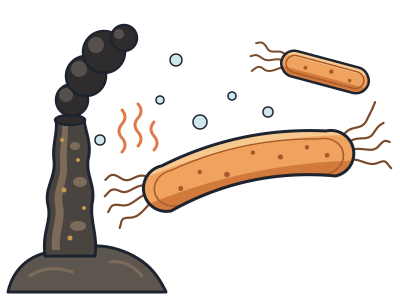
- MethanosarcinaGrows in clumps and makes methane from many foods, using a rare 22nd building block for its proteins.