An extinct species
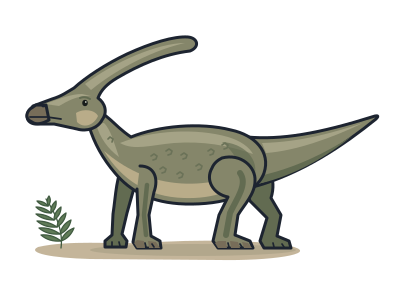
Parasaurolophus †
Parasaurolophus walkeri
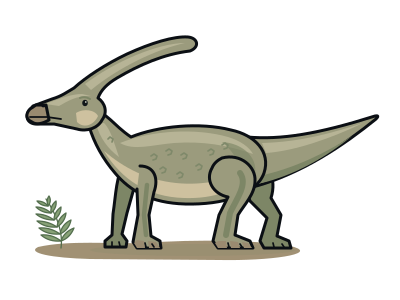
A duckbill with a trombone-like crest.
Lived about 77–73 million years ago.
You and the parasaurolophus meet in the Amniotes branch, shown at about 320 million years ago (on 4 December, in a calendar from life's shared ancestor to today).
This duck-billed dinosaur carried something like a trombone’s tubing on its head. Its long, hollow crest contained looping air passages that could have strengthened deep calls. That was an explanation based on fossil anatomy, not a sound preserved in stone. It belonged to the hollow-crested duckbill branch alongside Lambeosaurus. Edmontosaurus was also a duckbill, but belonged to a different branch of the family.
It lived in what is now Alberta, Canada. The wider group of closely related species was known from fossils about 77 to 73 million years ago; this species’ original skeleton dated to about 76 million years ago. Its surroundings included warm coastal lowlands, woodland and river floodplains beside an inland sea.
It ate plants and had a duck-like beak. Its limbs suggested that it could move on either two legs or four. Researchers thought it usually walked on all fours, beneath that striking backward-sweeping crest.
Replacement teeth
Its jaws held hundreds of teeth, including replacements for those worn down while processing plants.
A patch of skin
A small skin impression associated with the original specimen showed small scales that did not overlap.
Not a snorkel
The crest had no opening at its tip, so it could not have served as a snorkel.
Next to it on the tree
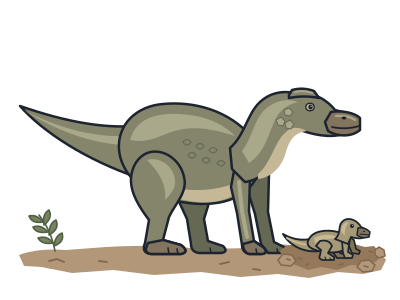
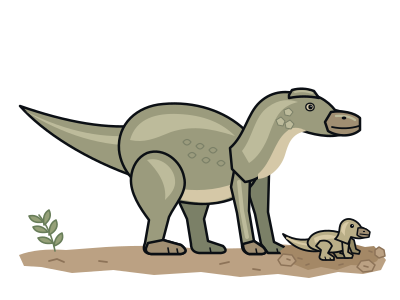
- EdmontosaurusKnown from 'mummies' with skin, and from a bone bitten by T. rex that healed.
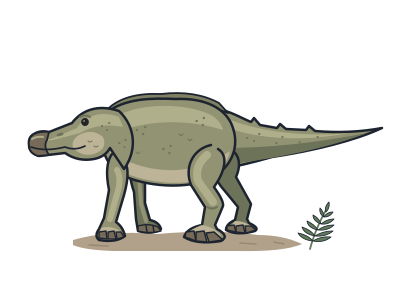
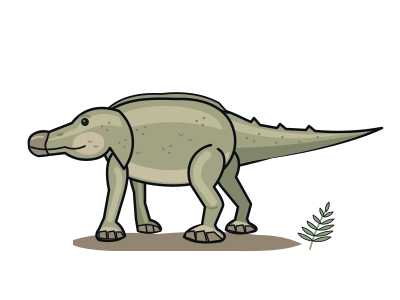
- MaiasauraNests full of young provided evidence that some dinosaurs cared for their offspring.
- LambeosaurusWore a hollow hatchet-shaped crest on its head.
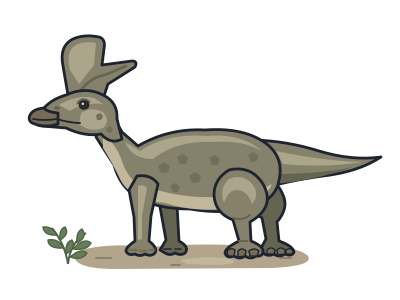
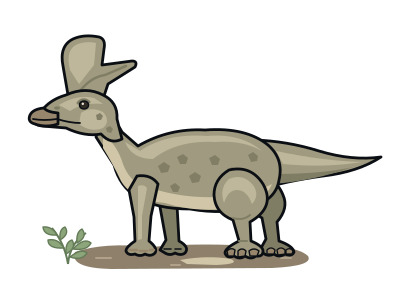
- CorythosaurusA duck-billed dinosaur with a helmet-shaped crest; skin impressions show its scales.