An extinct species
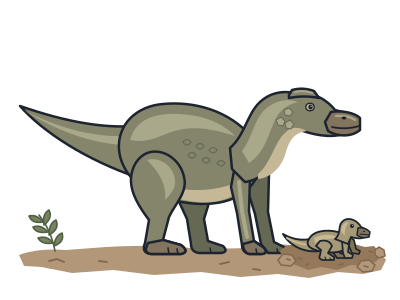
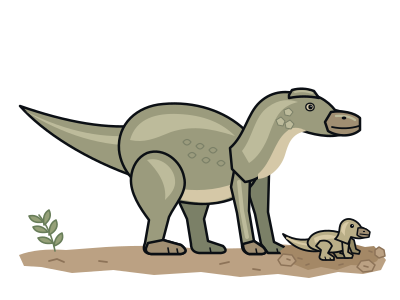
Maiasaura †
Maiasaura peeblesorum
The ‘good mother lizard’
Lived about 77–76 million years ago.
You and the maiasaura meet in the Amniotes branch, shown at about 320 million years ago (on 4 December, in a calendar from life's shared ancestor to today).
The name meant ‘good mother lizard’, and the clue lay in nests containing young dinosaurs. These fossils provided important evidence that some dinosaurs cared for their young. This animal belonged to the plant-eating duck-billed dinosaur family, alongside relatives such as Parasaurolophus and Edmontosaurus. Its nesting discoveries offered a glimpse of family life, not just the shape of a dinosaur’s skeleton.
It lived about 77 to 76 million years ago. Fossils from Montana, in the USA, included eggs, young animals and adults. Together, these remains allowed researchers to investigate several stages of its life, rather than piecing together its story from adult bones alone.
The nests were the heart of its story. They helped researchers ask whether young dinosaurs stayed near where they hatched and depended on adults. The evidence supported parental care, but it did not preserve exactly how adults behaved towards their young.
Built to chew
It had a hard beak and teeth suited to chewing plants.
Two legs or four
It could move on either two legs or four.
Named in 1979
Jack Horner and Bob Makela named the species in 1979.
Next to it on the tree
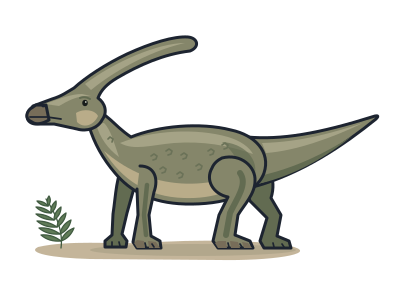
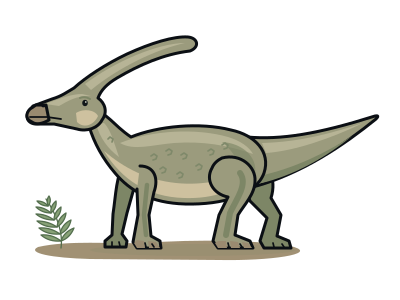
- ParasaurolophusA duck-billed dinosaur whose hollow head crest could trumpet like a trombone.
- EdmontosaurusKnown from 'mummies' with skin, and from a bone bitten by T. rex that healed.
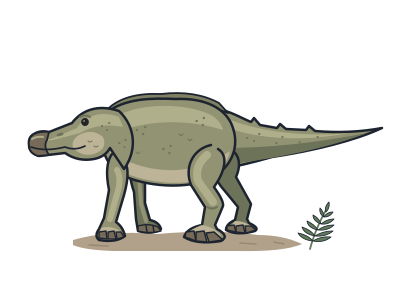
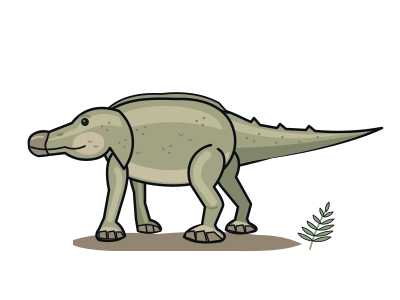
- LambeosaurusWore a hollow hatchet-shaped crest on its head.
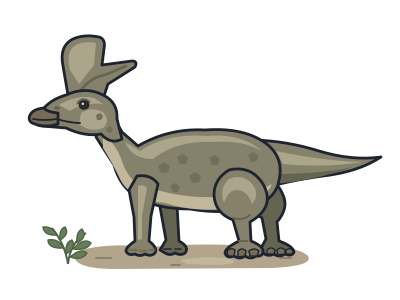
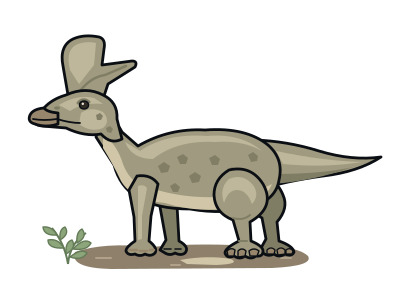
- CorythosaurusA duck-billed dinosaur with a helmet-shaped crest; skin impressions show its scales.