An extinct species
Edmontosaurus †
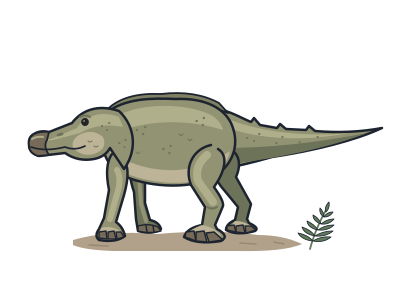
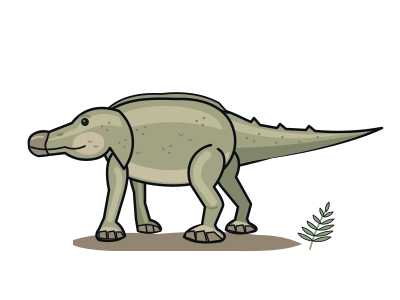
Edmontosaurus annectens
Skin-preserving mummies and a healed bite
Lived about 68–66 million years ago.
You and the edmontosaurus meet in the Amniotes branch, shown at about 320 million years ago (on 4 December, in a calendar from life's shared ancestor to today).
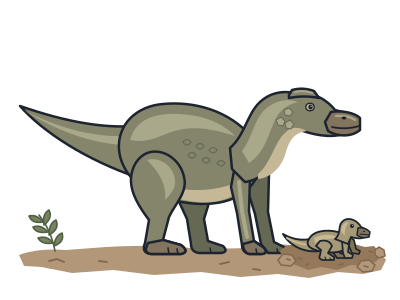
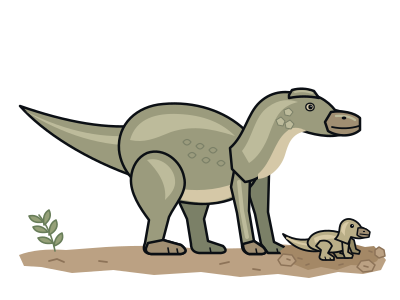
Skin-preserving ‘mummies’ revealed far more of this duck-billed dinosaur than bones alone could show. It belonged to the same dinosaur family as Maiasaura, Parasaurolophus and Lambeosaurus. It lived in western North America about 68 to 66 million years ago.
These mummies were not intact bodies of ancient flesh. In the studied Wyoming fossils, a very thin coating of clay preserved the shapes of the skin around the skeletons. This gave researchers evidence of the animal’s outer surface, rather than just the framework underneath.
A separate duck-billed dinosaur fossil from South Dakota told a story of survival. Two joined tail bones held a broken T. rex tooth, with healed bone around it. The new bone showed that the animal had survived the bite long enough to heal. This supported the idea that T. rex hunted living animals, rather than feeding only on animals that were already dead.
A ridge and a row of spikes
The Wyoming fossils revealed a fleshy ridge along the neck and back, changing into a single row of spikes over the hips and tail.
Hooves and heel pads
Each hind foot had three toes ending in wedge-shaped hooves, with a fleshy heel pad behind them.
Smaller bumps at the joints
The American Museum’s mummy preserved bumpy skin resembling bird feet, with smaller bumps around flexible joints.
Next to it on the tree
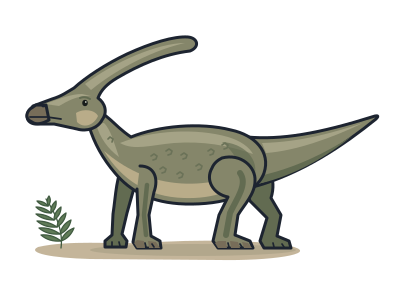
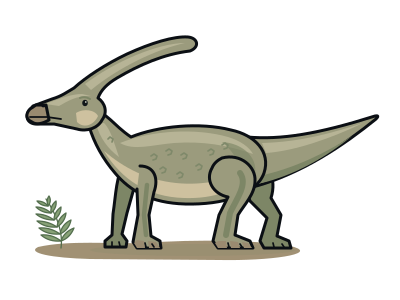
- ParasaurolophusA duck-billed dinosaur whose hollow head crest could trumpet like a trombone.
- MaiasauraNests full of young provided evidence that some dinosaurs cared for their offspring.
- LambeosaurusWore a hollow hatchet-shaped crest on its head.
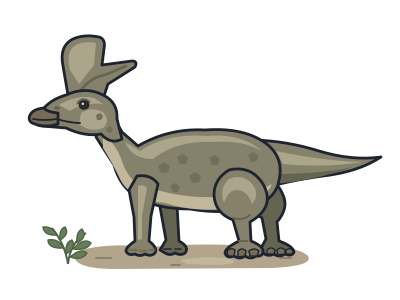
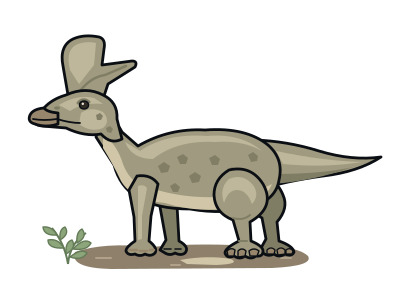
- CorythosaurusA duck-billed dinosaur with a helmet-shaped crest; skin impressions show its scales.