A species
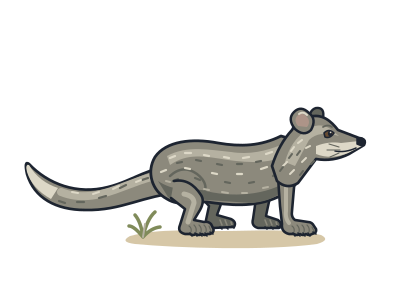
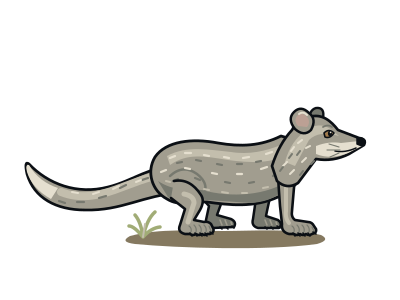
Indian grey mongoose
Urva edwardsii
Quick feet and a little protection against cobra venom
You and the indian grey mongoose meet in the Placental mammals branch, shown at about 95 million years ago (on 23 December, in a calendar from life's shared ancestor to today).
The Indian grey mongoose can fight cobras, dodging their strikes by jumping aside and weaving rapidly. It is also partly resistant to cobra venom. That is not complete immunity: avoiding bites still matters, and a mongoose is not guaranteed to win every encounter.
Its family connections may surprise you. Despite its long, low body, it belongs to the cat-like branch of the mammal family tree, alongside cats and hyenas. It is not a cat itself. Meerkats belong to the mongoose family too, making them its family relatives.
Snakes are only part of its menu. It also eats rodents, lizards, beetles, birds and eggs, along with some fruit and other plant foods. It usually hunts alone during daylight, including early morning and early evening. Scrub, grassland, thickets and cultivated fields all provide places for it to live and search for food.
Five toes
It has five toes on each foot.
Forty teeth
An adult has 40 teeth.
A midday retreat
It shelters in ground holes and hollow trees during the midday heat.
Next to it on the tree
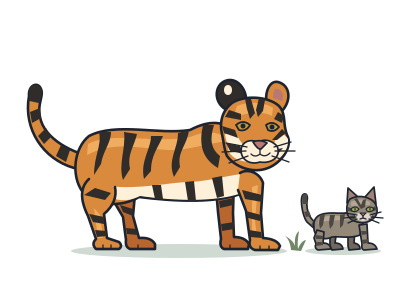
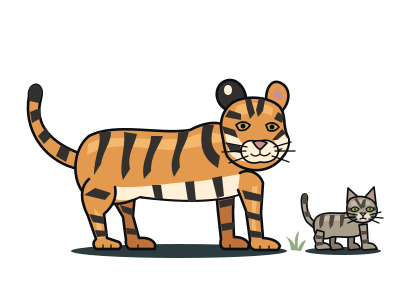
- CatsFrom house cats to tigers, all cats share an ancestor about 11 million years ago.
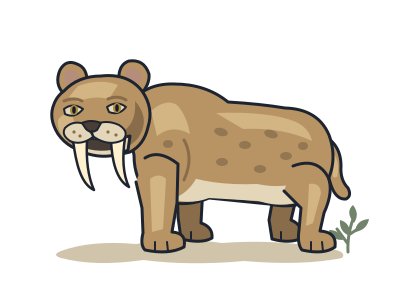
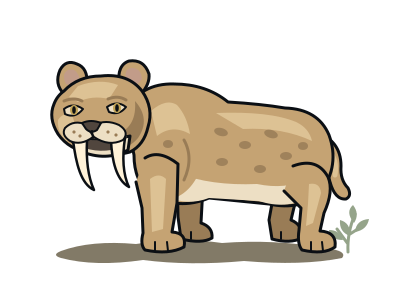
- Sabre-toothed catHad upper fangs about 18 centimetres long; models suggest a weaker jaw-driven bite than a similar-sized lion.
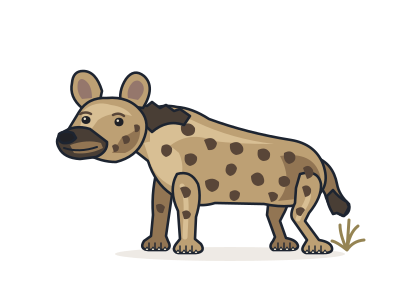
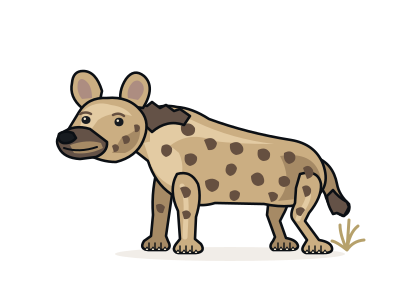
- Spotted hyenaLooks like a dog but is closer to cats, and females run the clan.
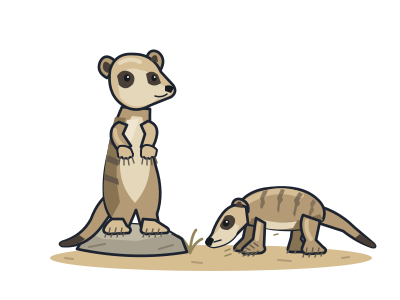
- MeerkatTakes turns standing sentry while the rest of the mob forages.
- FossaMadagascar’s top predator looks like a small puma but is a mongoose relative.
- BinturongA shaggy treetop "bearcat" with a gripping tail whose scent is said to smell like popcorn.