A species
Meerkat
Suricata suricatta
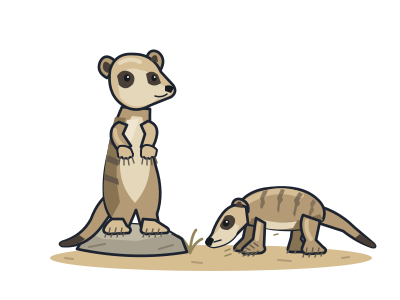
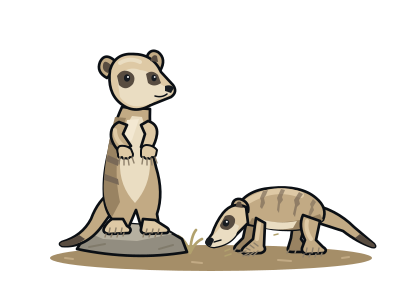
A mongoose that takes a turn on lookout.
You and the meerkat meet in the Placental mammals branch, shown at about 95 million years ago (on 23 December, in a calendar from life's shared ancestor to today).
Adult meerkats take turns standing lookout while the rest of their group searches for food. From a rock, termite mound or bush, the guard often stands upright. Quiet peeping calls signal that things are safe; different alarm calls warn of hunters approaching on the ground or through the air.
Despite its name, a meerkat is a mongoose, not a small cat. These small mammals live in dry southern Africa, in open grassland, scrub and semi-desert. Their sandy, brown or grey coats have dark bands across the back and dark patches around the eyes.
A group is called a mob. Its members spend much of the day searching for food, mostly insects. They also eat eggs, small animals with backbones and some plant material. Below ground, their homes have several entrances, tunnels and sleeping chambers. Deeper tunnels shelter the group from extreme heat and cold.
Sand shutters
Meerkats can close their ears to keep sand out while digging.
Built to dig
Each foot has four toes with long claws that cannot be pulled back into the foot.
Shared childcare
Both males and females help care for pups, including staying at the burrow while their mother searches for food.
Next to it on the tree
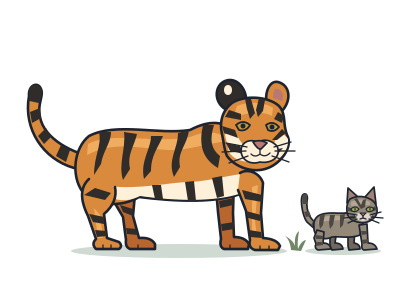
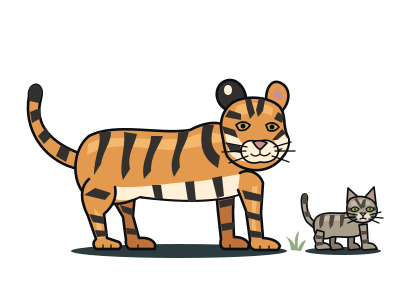
- CatsFrom house cats to tigers, all cats share an ancestor about 11 million years ago.
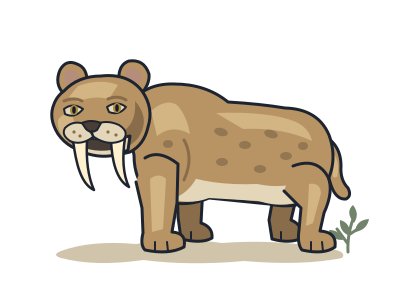
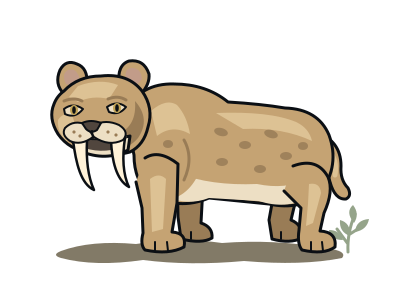
- Sabre-toothed catHad upper fangs about 18 centimetres long; models suggest a weaker jaw-driven bite than a similar-sized lion.
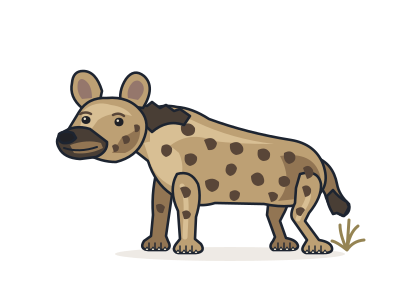
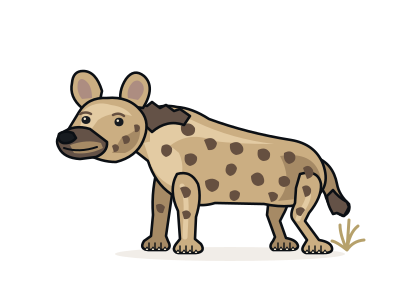
- Spotted hyenaLooks like a dog but is closer to cats, and females run the clan.
- Indian grey mongooseFast enough to fight cobras, and partly resistant to their venom.
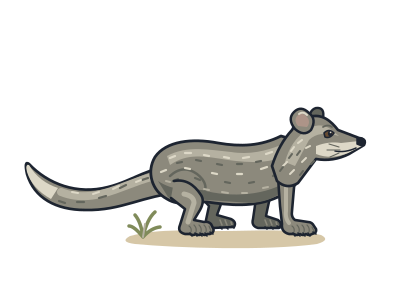
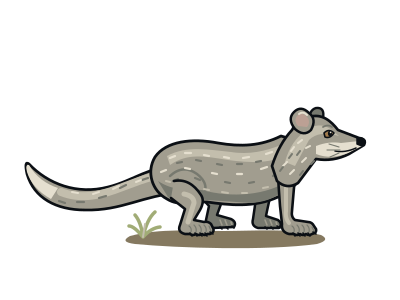
- FossaMadagascar’s top predator looks like a small puma but is a mongoose relative.
- BinturongA shaggy treetop "bearcat" with a gripping tail whose scent is said to smell like popcorn.