A species complex
King cobra
Ophiophagus (king cobra complex)
The longest venomous snake, and a nest-guarding parent.
You and the king cobra meet in the Amniotes branch, shown at about 320 million years ago (on 4 December, in a calendar from life's shared ancestor to today).
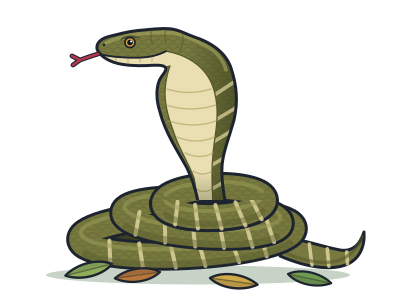
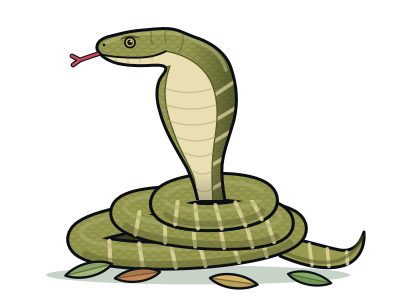
King cobras are the world's longest venomous snakes. This page covers the closely related snakes traditionally called Ophiophagus hannah. Most adults are about 3 to 3.6 metres long, and very large ones can reach about 5.4 metres, roughly as long as a minivan. It eats mostly other snakes, even venomous ones, and sometimes takes lizards.
It belongs with lizards and snakes, so the panther chameleon shown beside it on the tree is a distant cousin. That may seem surprising, but here is another twist: despite its name and hood, it is not a true cobra and sits in a group of its own.
The female scrapes leaves and branches into a mound nest and lays about 21 to 40 leathery eggs inside, kept warm in part by heat from rotting plants. She stays coiled on the nest to guard them until they hatch, while the male stays close by.
Daytime hunter with sharp eyes
Its eyesight is better than most snakes', good enough to spot a moving person about 100 metres away, and it hunts mainly by day.
A growling hiss
Its hiss is unusually low, more like a dog's growl, and can be heard from a distance.
Wrestling males
Males fight by ritual wrestling, with the winner pushing the loser's head to the ground.
Next to it on the tree
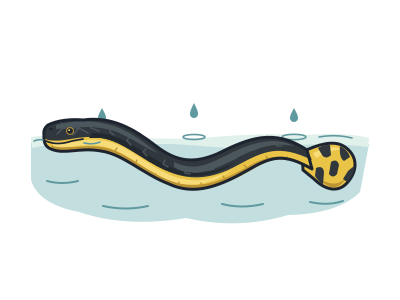
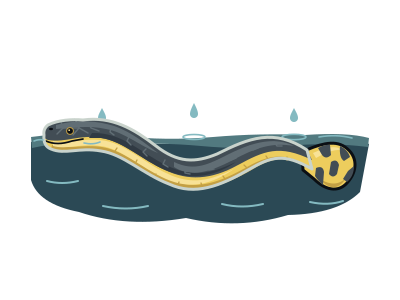
- Yellow-bellied sea snakeLives its whole life drifting at sea and drinks from the fresh layer left by rain.
- Black mambaNamed for the inky black inside its mouth; among the fastest snakes.
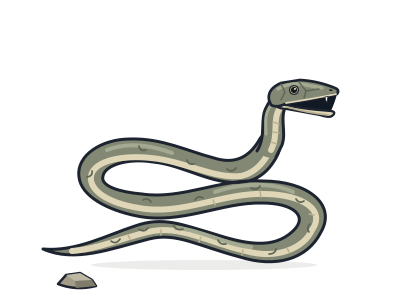
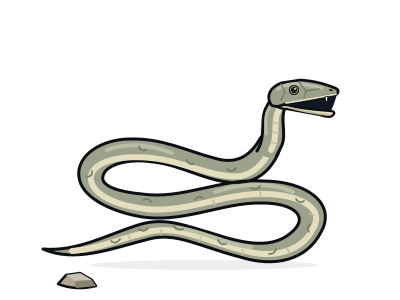
- Inland taipanHas the most toxic venom of any land snake, yet is shy and almost never meets people.
- Eastern coral snakeIts red, yellow and black rings are copied by several harmless snakes.