A species
Hercules beetle
Dynastes hercules
A giant scarab built for wrestling.
You and the hercules beetle meet in the Two-sided animals branch, shown at about 580 million years ago (on 11 November, in a calendar from life's shared ancestor to today).
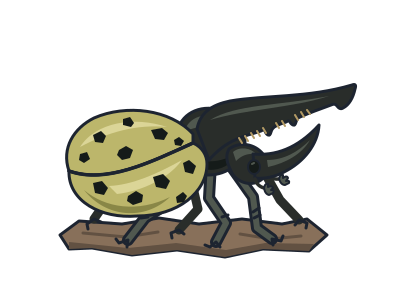
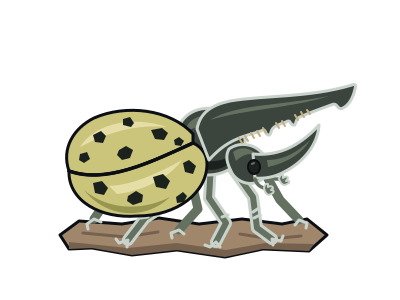
The Hercules beetle is among the longest beetles, thanks largely to the male’s enormous horns. Much of that impressive length is horn, not body. This horned wrestler belongs to the rhinoceros beetles, a group within the scarab beetle family. The sacred scarab shown nearby belongs to that same family, despite looking very different.
A male has two main horns. One grows from his head; the longer one reaches forwards from the body section just behind it. Together they work like pincers, grasping and lifting rival males during contests over access to females. The horns are wrestling tools rather than weapons for catching food.
Despite their fierce appearance, adults mainly eat rotting fruit that has fallen to the rainforest floor. They can also feed on tree sap. Their usual meals come from plants, rather than from hunting other animals.
A different look
Females have no horns. Their wing covers are usually black, with a noticeably pitted surface.
Growing inside wood
The young grubs eat decaying wood inside rotten trunks, helping break it down and return nutrients to the forest.
Flying after dark
Adults fly mainly around twilight or at night, with especially strong activity shortly before dawn.
Next to it on the tree
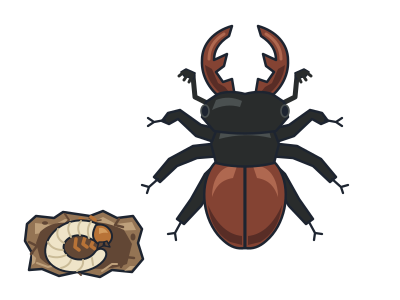
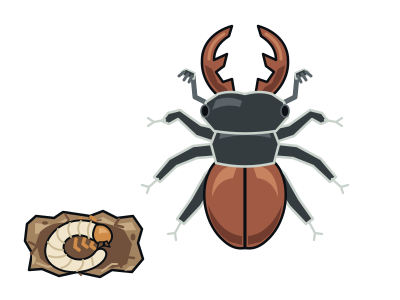
- Stag beetleMales wrestle with huge antler-like jaws, after years as a grub in rotting wood.
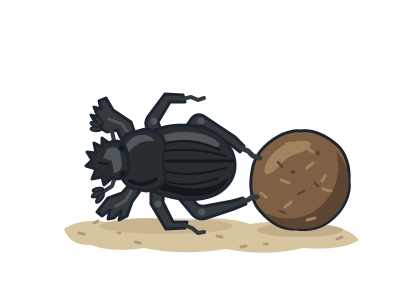
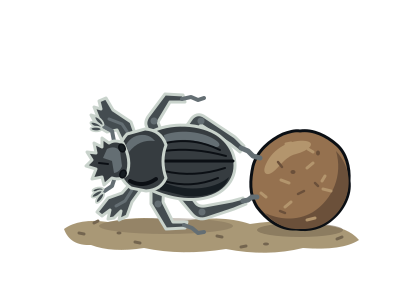
- Sacred scarabRolls dung balls and was revered as a sun god in ancient Egypt.
- Goliath beetleOne of the heaviest insects, its grubs reaching about 100 grams.
- Japanese rhinoceros beetleA horned beetle kept as a pet by Japanese children and sold in vending machines.
- CockchaferA clumsy May bug that bumbles into lit windows after years as a root-eating grub.
- Rose chaferA metallic green beetle that flies with its wing cases closed.
- Bull-headed dung beetleCan pull over 1,000 times its own weight, perhaps the strongest insect for its size.
- Glorious beetleA green and silver scarab whose shell reflects light twisted into a spiral.