A species
Sacred scarab
Scarabaeus sacer
A dung roller sacred to the rising Sun
You and the sacred scarab meet in the Two-sided animals branch, shown at about 580 million years ago (on 11 November, in a calendar from life's shared ancestor to today).
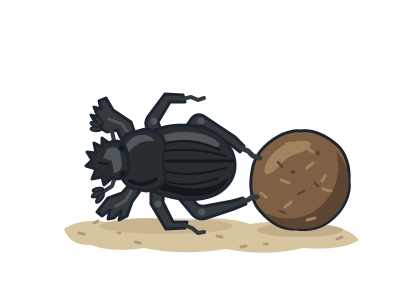
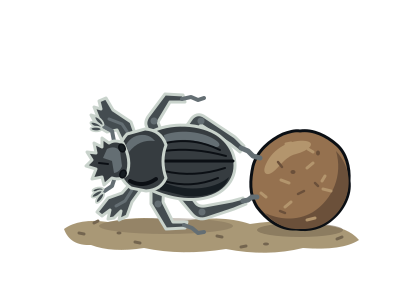
The sacred scarab rolls balls of dung, but ancient Egyptians saw something grander in its work. They associated it with Khepri, the god of the rising Sun. Rolling a ball echoed the god moving the Sun across the sky. This beetle also has a surprising family connection: it shares the scarab beetle family with the Hercules beetle shown nearby on the tree.
Dung means animal droppings, and a ball is not always a nursery. A sacred scarab may bury one in an underground chamber and spend several days eating it. Its range stretches across southern Europe, North Africa and western Asia, so this is far more than an Egyptian beetle.
Only a minority of dung beetle species roll balls. Others bury dung beneath a dropping or live inside it. By burying animal waste, dung beetles help return nutrients to the soil. Their food may seem unappealing to us, but their work helps keep the ground clean.
A carefully packed nursery
A female shapes buried dung into a pear-shaped package, placing one egg in a hollow at its narrow end. The young grub eats the package after hatching.
Six digging points
Six tooth-like points edge the head shield. They help with digging and shaping dung.
Different animals supply dinner
Recorded foods include horse dung, cow dung and deer droppings.
Next to it on the tree
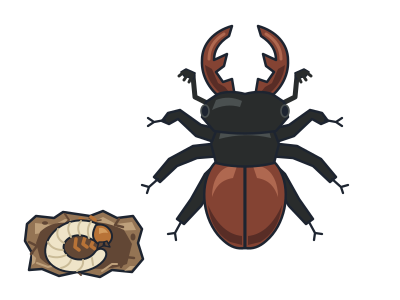
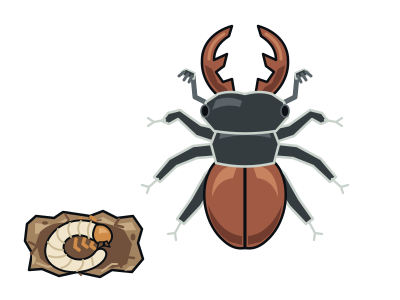
- Stag beetleMales wrestle with huge antler-like jaws, after years as a grub in rotting wood.
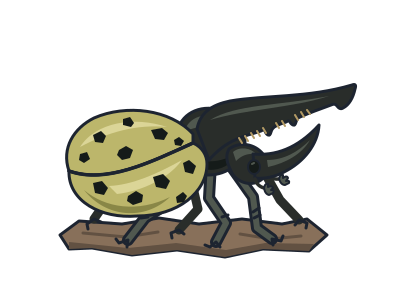
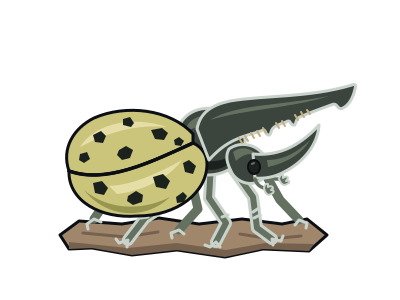
- Hercules beetleOne of the longest beetles, with a huge horn used for wrestling rivals.
- Goliath beetleOne of the heaviest insects, its grubs reaching about 100 grams.
- Japanese rhinoceros beetleA horned beetle kept as a pet by Japanese children and sold in vending machines.
- CockchaferA clumsy May bug that bumbles into lit windows after years as a root-eating grub.
- Rose chaferA metallic green beetle that flies with its wing cases closed.
- Bull-headed dung beetleCan pull over 1,000 times its own weight, perhaps the strongest insect for its size.
- Glorious beetleA green and silver scarab whose shell reflects light twisted into a spiral.