An extinct species
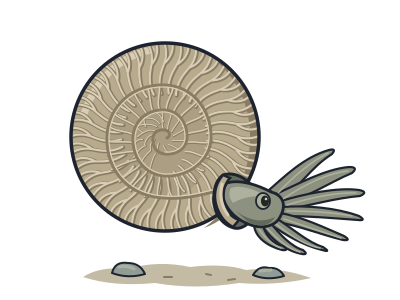
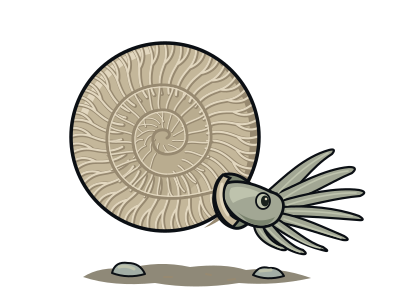
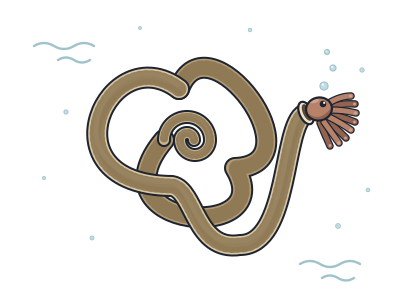
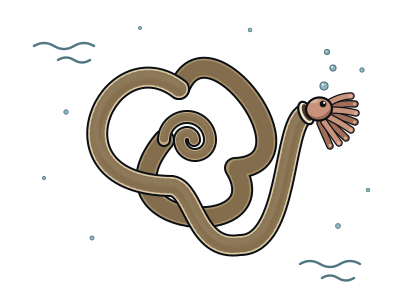
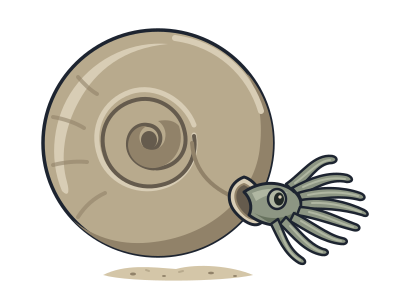
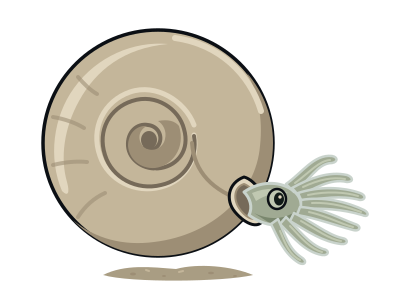
Giant ammonite †
Parapuzosia seppenradensis
The largest known ammonite, with a preserved shell nearly two metres across.
Lived about 82–79 million years ago.
You and the giant ammonite meet in the Two-sided animals branch, shown at about 580 million years ago (on 11 November, in a calendar from life's shared ancestor to today).
The largest known ammonite had a preserved shell nearly two metres across—roughly the height of an adult. Despite its snail-like shape, it was a relative of squid and octopuses, not a giant snail. It lived about 82 to 79 million years ago.
Fossils showed a coiled shell shaped like a broad disc, with a rounded outer edge. The animal’s body occupied the outermost space inside the shell. As it grew, it extended its shell and sealed off older spaces behind it. The largest fossil was incomplete, so its full shell width had to be estimated.
It lived in seas covering much of what is now Westphalia in Germany. Fossils have also been found in England, Mexico and the USA. Researchers inferred that its divided shell helped it float, and that it moved by pushing water out to drive itself along. These movements were reconstructed, rather than preserved in the shell fossils.
A heavyweight fossil
The famous German fossil weighed about 3.5 tonnes. That was its fossil weight, not the weight of the living animal.
Smoother with age
The largest adults had much smoother shell sides than younger individuals.
More than one giant
A 2021 study examined about 140 specimens assigned to this species.