An extinct species
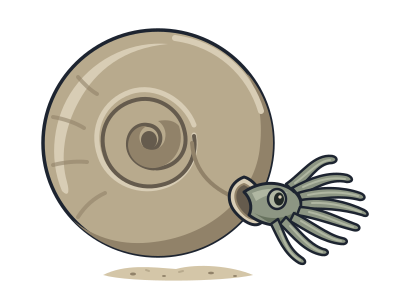
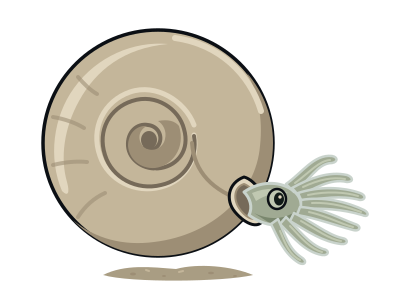
Snakestone ammonite †
Dactylioceras commune
A squid relative whose ribbed shell became a stone snake souvenir.
Lived about 182–178 million years ago.
You and the snakestone ammonite meet in the Two-sided animals branch, shown at about 580 million years ago (on 11 November, in a calendar from life's shared ancestor to today).
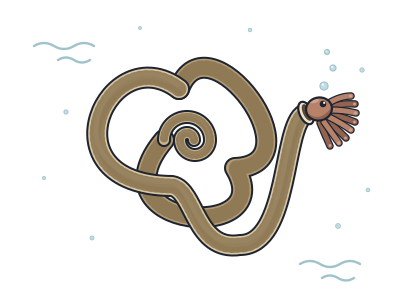
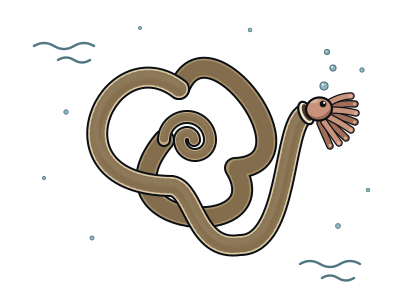
Its ribbed coils were once sold as petrified snakes. In nineteenth-century Whitby, collectors carved snake heads onto ammonite fossils and sold them to tourists as “snakestones”. Yet the animal behind this shell was a relative of squid, octopuses and nautiluses—not a snake.
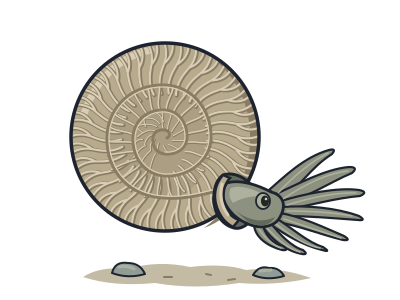
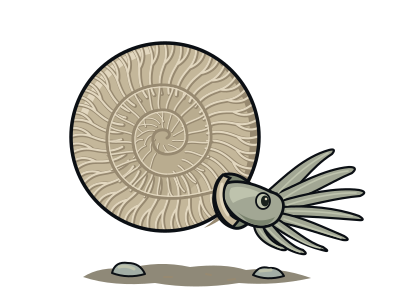
It lived in Early Jurassic seas, roughly within the interval about 182 to 178 million years ago. It belonged to the same broad ammonite group as the giant ammonite shown beside it on the tree. Fossils preserved its rounded, ribbed shell, coiled into a flat spiral.
That spiral was not a solid lump of shell. Inside were chambers that helped the animal float. Its soft body occupied the outermost chamber, rather than filling every space. As it grew, it extended its shell and sealed off older spaces behind it. The shell provided firm evidence of its appearance, but a complete soft-bodied animal was not documented for this species.
A saint’s snake story
Whitby folklore credited Saint Hilda with turning snakes to stone. This was a legend, not the fossils’ real origin.
Inner coils stayed visible
The shell’s earlier turns remained visible near the centre instead of being hidden beneath the final coil.
Clues for dating rocks
Scientists used ammonite fossils to compare and date rock layers because ammonites were widespread and their shell shapes changed through time.