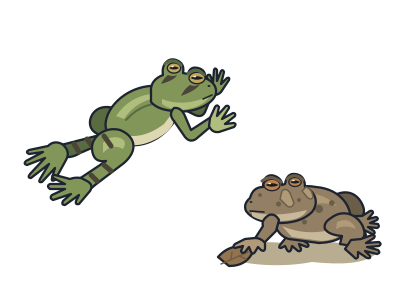
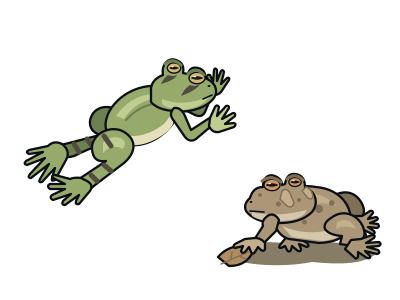
A group of living things
Frogs and toads
Anura
Every toad is a frog.
This branch is shown at about 210 million years ago; its age is a rough estimate.
You and frogs and toads meet in the Four-limbed animals branch, shown at about 350 million years ago (on 1 December, in a calendar from life's shared ancestor to today).
Every toad is a frog: the animals called ‘true toads’ form just one family within the wider frog group. A squat, bumpy toad and a smooth, long-legged frog are not two separate kinds of animal. Even their looks can mislead you. Some true toads have smooth skin, while other frogs look toad-like.
Many frogs are powerful jumpers. Their long back legs can launch them more than 20 times their own body length. Their basic body plan has stayed recognisable for about 200 million years. That does not mean frogs stopped evolving: their limb proportions, ways of moving and lifestyles have continued to change.
Their skin does important work. Frogs absorb water through it, and oxygen can pass through it too, provided it stays moist. Most frogs begin life as tadpoles with tails and gills. As they change into frogs, legs develop and the tail is absorbed into the body—it does not simply fall off.
A chorus with a purpose
Male frogs commonly call to attract mates and warn rivals. Different species have different calls.
Surviving a freeze
Wood frogs can survive with part of their bodies frozen. Sugar concentrated in their tissues helps protect their cells.
Eyes help with swallowing
Frogs can pull their eyes down towards the roof of their mouth to help push food down.
Inside frogs and toads
- Devil frogA large fossil frog with a broad armoured skull; later finds reduced its famous beach-ball size estimate.
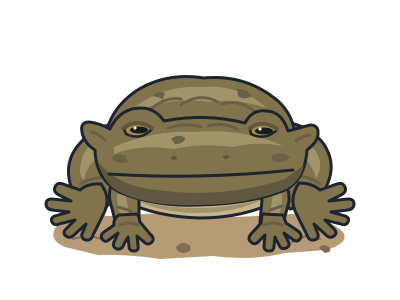
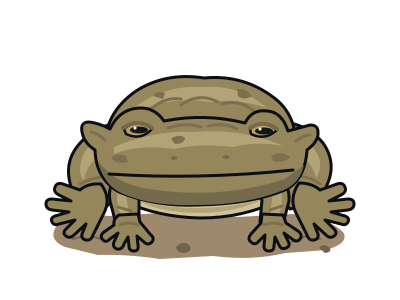
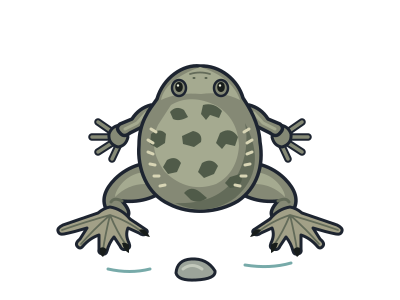
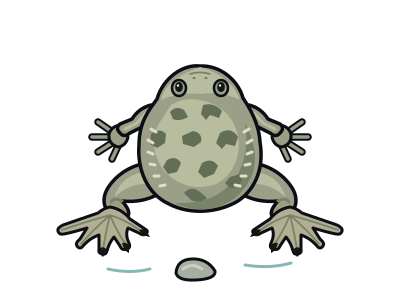
- African clawed frogA tongueless frog once used as a pregnancy test, and a key animal in biology labs.
- Toads, tree frogs and poison frogsHalf of all frog species, mostly from the Americas, burst into variety as the dinosaurs vanished.
- True frogs and kinThe classic pond frogs, now found almost worldwide, from tiny leaf frogs to giant goliaths and gliding flying frogs.
- Coastal tailed frogLives in icy mountain streams; the male's 'tail' helps it mate without being swept away.
- Common midwife toadThe father carries strings of eggs wrapped around his back legs until they are ready to hatch.
Next to it on the tree
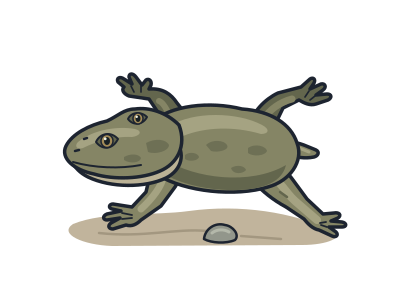
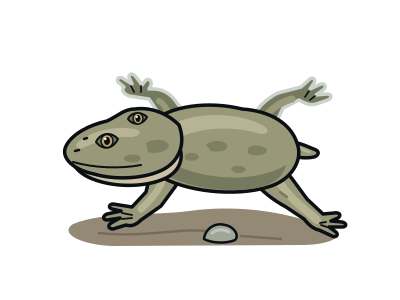
- TriadobatrachusAn early frog relative with separate tail bones and a skeleton better suited to walking than powerful leaps.
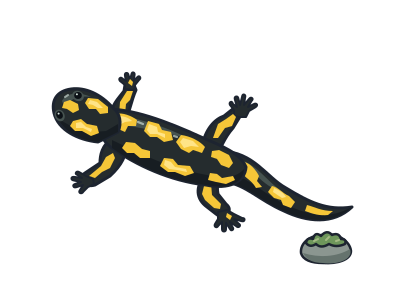
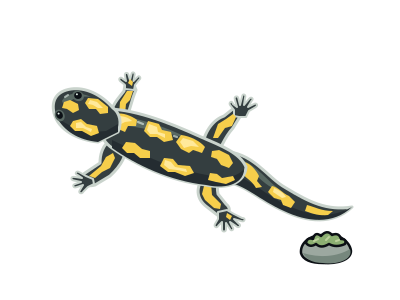
- Salamanders and newtsTailed amphibians, from finger-sized newts to giants longer than a person.
- CaeciliansLegless, burrowing amphibians that look like big earthworms and are rarely seen by anyone.
- EocaeciliaAn early caecilian relative that still had tiny legs, linking caecilians to legged ancestors.