A species
African clawed frog
Xenopus laevis
A tongueless frog with a remarkable role in medicine
You and the african clawed frog meet in the Four-limbed animals branch, shown at about 350 million years ago (on 1 December, in a calendar from life's shared ancestor to today).
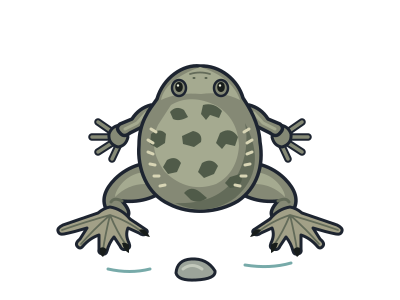
This tongueless relative of tree frogs and toads once helped doctors test for pregnancy. Today it remains a key animal in biology labs. It belongs to the tongueless frog family: not every frog catches food with a flicking tongue. Instead, it draws food into its mouth and uses its front fingers to push it in.
In the mid-1900s, doctors used female African clawed frogs as pregnancy tests. A human pregnancy hormone—a chemical messenger—could trigger the frogs to lay eggs. Their large, plentiful eggs also make them useful for research. These develop outside the mother's body, so scientists can follow how a fertilised egg becomes an animal.
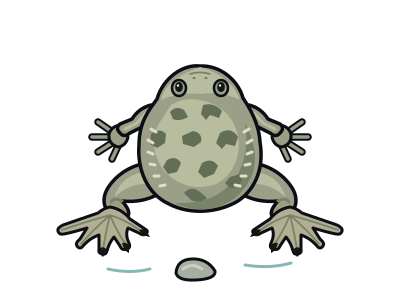
Away from the lab, this frog is well equipped for life underwater. Pale, stitch-like marks along its body contain sensors that detect water movement, helping it find prey and notice predators in murky water. Fish have a similar sensing system. It swims strongly, but on land it crawls rather than making typical frog hops.
No visible eardrums
Like other members of its tongueless frog family, it has no visible external eardrums.
Changing shades
Its skin can become darker, lighter or more mottled to help match its surroundings.
No parental care
Adults do not care for their offspring after the eggs are laid and fertilised.
Next to it on the tree
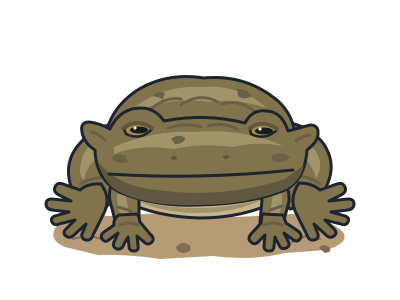
- Devil frogA large fossil frog with a broad armoured skull; later finds reduced its famous beach-ball size estimate.
- Toads, tree frogs and poison frogsHalf of all frog species, mostly from the Americas, burst into variety as the dinosaurs vanished.
- True frogs and kinThe classic pond frogs, now found almost worldwide, from tiny leaf frogs to giant goliaths and gliding flying frogs.
- Coastal tailed frogLives in icy mountain streams; the male's 'tail' helps it mate without being swept away.
- Common midwife toadThe father carries strings of eggs wrapped around his back legs until they are ready to hatch.