A group of living things
Caecilians
Gymnophiona
Legless, burrowing amphibians that look like big earthworms and are rarely seen by anyone.
This branch is shown at about 185 million years ago; its age is a rough estimate.
You and caecilians meet in the Four-limbed animals branch, shown at about 350 million years ago (on 1 December, in a calendar from life's shared ancestor to today).
Compare with something else
Legless, burrowing amphibians that look like big earthworms and are rarely seen by anyone.
The full page for Caecilians is still being written and drawn.
Inside caecilians
- Taita African caecilianA legless burrowing amphibian whose babies feed by peeling off their mother's skin.
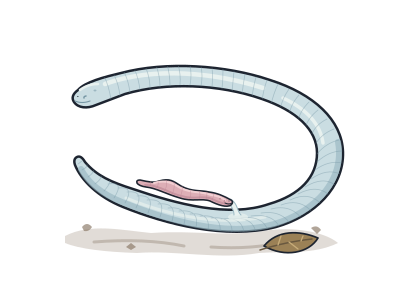
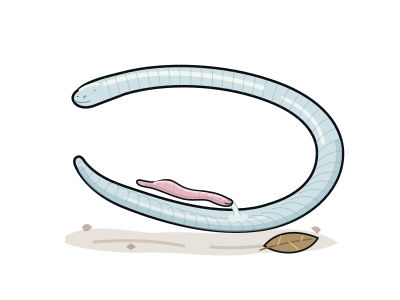
- Ringed caecilianA blue-grey, ringed burrower from South America whose babies also feed on their mother's skin.
- Rubber eelNot an eel at all: a fully aquatic caecilian that gives birth to live young.
Next to it on the tree
- Frogs and toadsEvery toad is a frog: a body plan built for jumping that has barely changed in 200 million years.
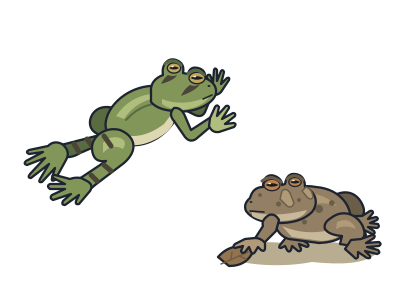
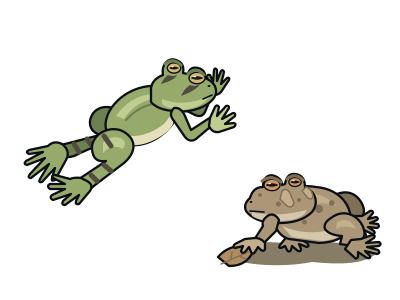
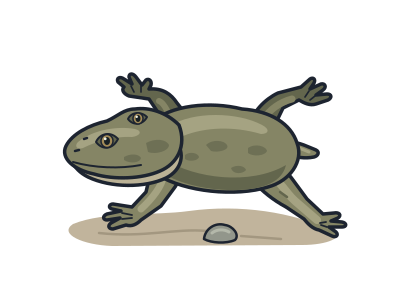
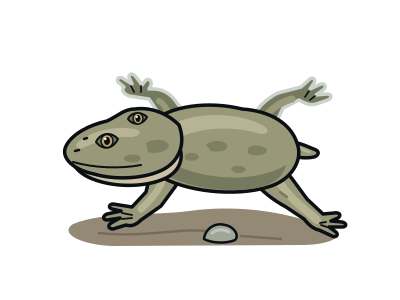
- TriadobatrachusAn early frog relative with separate tail bones and a skeleton better suited to walking than powerful leaps.
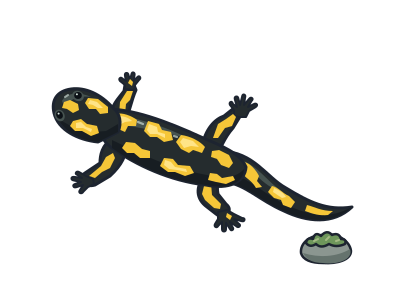
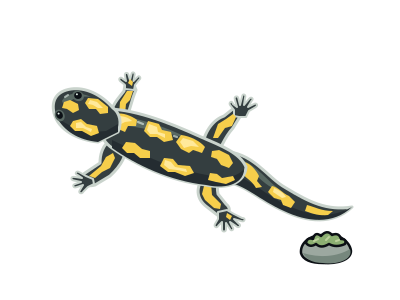
- Salamanders and newtsTailed amphibians, from finger-sized newts to giants longer than a person.
- EocaeciliaAn early caecilian relative that still had tiny legs, linking caecilians to legged ancestors.