A group of living things
Desmids and pond silk
Zygnematophyceae
Pond algae that are the closest living relatives of every land plant
This branch is shown at about 620 million years ago; its age is a rough estimate.
You and desmids and pond silk meet in the Eukaryotes branch, shown at about 1.8 billion years ago (on 28 July, in a calendar from life's shared ancestor to today).
Every tree, flower, grass and moss on land has close family in the green slime of a pond. A big study compared more than 800 genes from 92 kinds of plants and algae. It gave strong support for these simple freshwater algae being the sister group of land plants. That makes them land plants' closest living algal relatives. It does not mean oak trees came from pond silk, though. Both share an ancestor, and these algae have changed a lot since then.
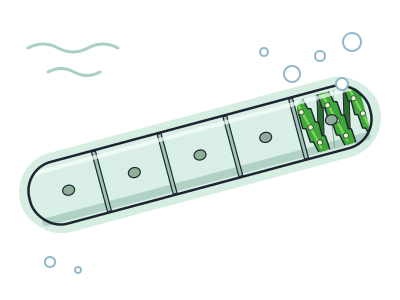
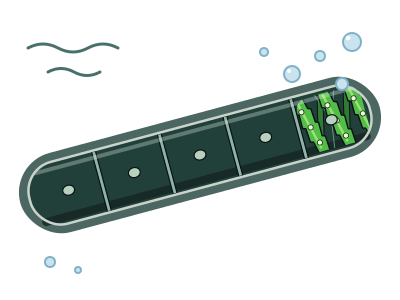
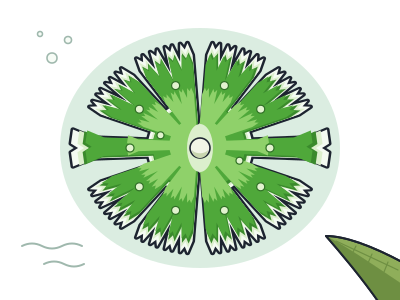
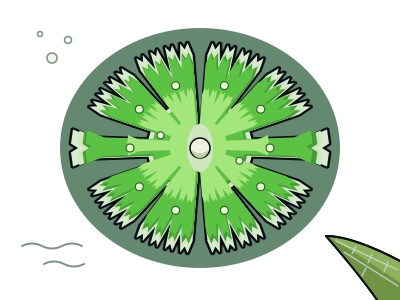
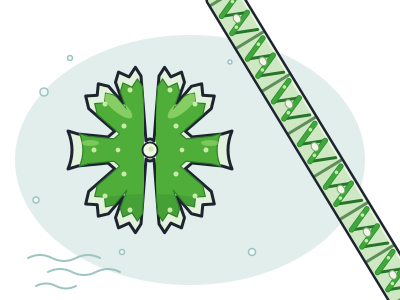
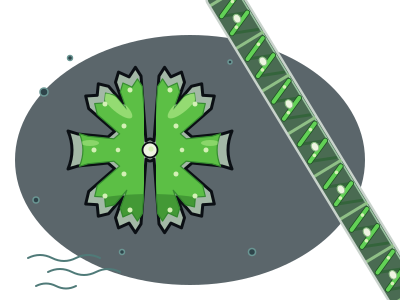
Pond silk forms long, unbranched threads of see-through cells joined end to end. Inside each cell, green ribbons wind in a spiral like a spring. Masses of threads float as shiny, silky green mats in shallow ponds and ditches. Desmids are mostly single cells made of two mirror-image halves joined at a narrow waist. Some look like tiny cut-paper stars. Many prefer acidic bogs full of Sphagnum moss.
None of these algae make swimming cells with whip-like tails. Instead, they mate by joining up. Two cells or threads line up and tubes grow between them. Usually the contents of one cell crawl across and merge with the other, but sometimes both meet in the middle of the tube. In pond silk, the joined threads look like a ladder. This often happens in hard times, such as when a pond is drying up.
Mystery crystals
Many desmids carry tiny crystals of barium sulphate at each end of the cell. Nobody yet knows what they are for.
Clean-water signs
Desmids are sensitive to change, so scientists use them as signs of how healthy a pond, bog or wetland is.
Older than the dinosaurs
Fossils show this group was already around at least about 390 million years ago, long before the first dinosaurs.