A species
Spirogyra
Spirogyra
Silky pond threads with spiral green ribbons, and the closest algal kin of land plants
You and the spirogyra meet in the Eukaryotes branch, shown at about 1.8 billion years ago (on 28 July, in a calendar from life's shared ancestor to today).
Those silky green threads drifting in a pond might look like plain old scum. But they belong to the group of algae that is the closest algal relative of all land plants, from mosses to gum trees. For a long time, scientists thought the more plant-like stoneworts held that title. Then a 2011 study compared 129 genes across 40 groups of green plants. It pointed to simple-looking threads like these instead.
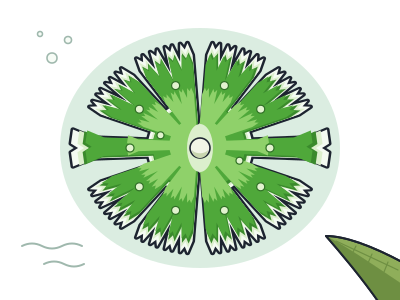
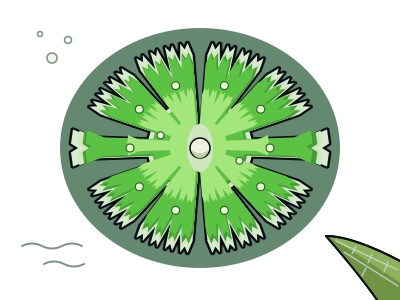
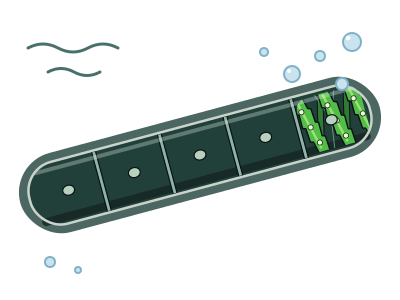
Each thread is a single chain of tiny cells joined end to end, like a row of glass tubes. Inside each cell, one or more flat green ribbons wind round like a spiral staircase. These ribbons are chloroplasts, and they use sunlight to make food. Their spiral shape gives the alga its name.
In sunshine, the threads make so much oxygen that tiny bubbles get caught between them. The bubbles lift the tangled mats up to the surface. These floating mats feed and shelter tiny animals, insects and young fish.
When conditions get worse, two threads often lie side by side and grow little bridges between facing cells, like the rungs of a ladder. The contents of one cell crawl across and join with its partner. Together they make a tough spore.
Found on every continent
This alga lives in fresh water all over the world. It has even been found in Antarctica.
A dish in Thailand
In northern and north-eastern Thailand, people eat it as 'thao'. It goes raw with dipping sauces, or into spicy salads, curries and omelettes, and it provides vitamin A and calcium.
Identified by its spores
You usually cannot tell which species you have just by looking at its ordinary threads. Scientists rely on the shape of the spores, but getting the alga to make spores in the lab is hard.