An extinct species
Ceratosaurus †
Ceratosaurus nasicornis
A Jurassic predator with a horned face
Lived about 153–148 million years ago.
You and the ceratosaurus meet in the Amniotes branch, shown at about 320 million years ago (on 4 December, in a calendar from life's shared ancestor to today).
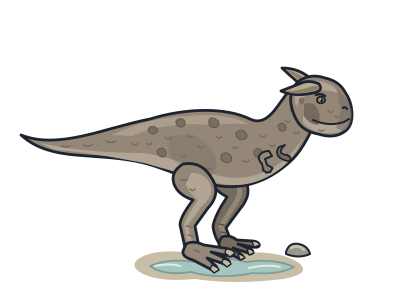
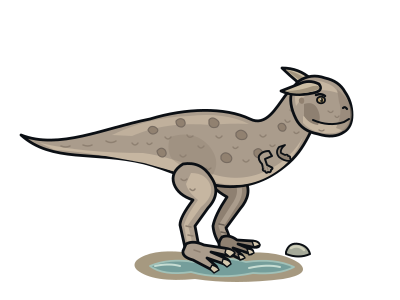
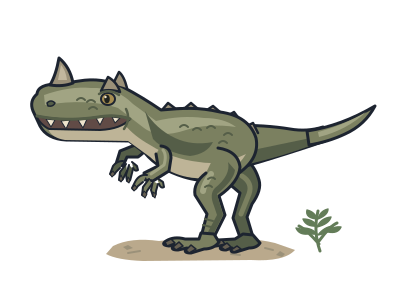
With a horn on its nose and bony bumps above its eyes, this Jurassic predator had a distinctive face. It belonged to the same broad dinosaur branch as Carnotaurus and Majungasaurus, though those two belonged to a different family within that branch.
It lived about 153 to 148 million years ago in what is now western North America. It was a meat-eater with long, blade-shaped teeth. In Utah, it shared its surroundings with the larger predators Allosaurus and Torvosaurus. It stood on two powerful back legs and had short arms and a long, tapering tail.
Fossil bones provided evidence for its skull ornaments, teeth and limbs. These were not simply decorations imagined by artists. But turning those bones into a picture of a living animal still required reconstruction: muscles and the outline of its skin were not preserved in full.
Bones in its skin
A row of small bones ran along its back, embedded in its skin and separate from its backbone.
A connected discovery
Marshall Parker Felch discovered the first skeleton in Colorado in 1883. Many bones were still connected.
A name to match
Its name meant ‘horned lizard’. Othniel Charles Marsh named it in 1884.