An extinct species
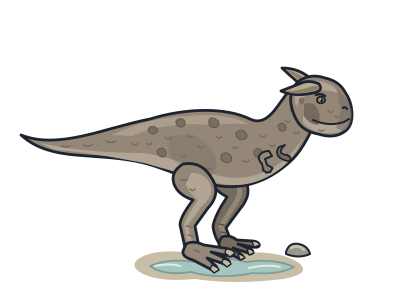
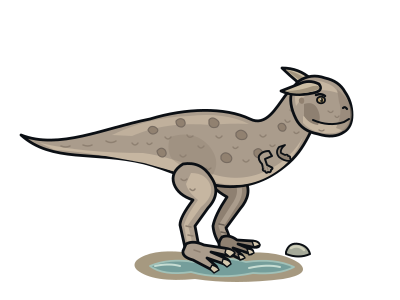
Carnotaurus †
Carnotaurus sastrei
Two horns, tiny arms and a bull-like name
Lived about 72–69 million years ago.
You and the carnotaurus meet in the Amniotes branch, shown at about 320 million years ago (on 4 December, in a calendar from life's shared ancestor to today).
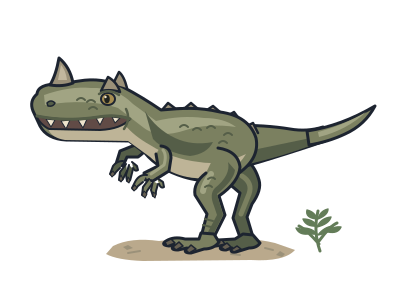
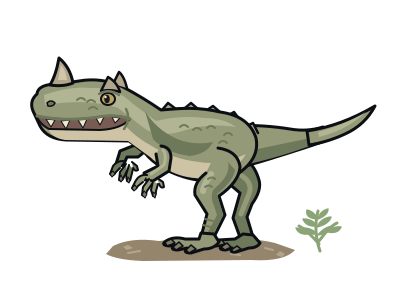
The ‘meat-eating bull’ had two horns and arms so tiny they were probably of little practical use. Its name referred to its horns, not a connection to cattle. It belonged to the same dinosaur family as Majungasaurus, within a wider branch that also included Ceratosaurus.
It lived about 72 to 69 million years ago in what is now Patagonia, Argentina. At about 8 metres long, it was roughly the length of a small bus. Despite its tiny arms and meat-eating habits, it belonged to a different major dinosaur branch from Tyrannosaurus.
Fossils preserved more than bones: impressions of patches of skin survived too. These patches showed scales, with no evidence of feathers in the preserved areas. They offered a direct glimpse of its outer covering, but not its colour. Although it ate meat, exactly which animals it hunted remained uncertain.
Tiny hands
Each hand retained four reduced bony digits, unlike the two working fingers of Tyrannosaurus.
A surprising head shape
Its snout was unusually short, and its head looked very narrow from the front.
A Patagonian discovery
Its fossil skeleton was discovered in 1984 in Chubut Province, Argentina.