A species
Andalucia
Andalucia godoyi
A tiny soil cell whose power stations still look remarkably like bacteria
You and the andalucia meet in the Eukaryotes branch, shown at about 1.8 billion years ago (on 28 July, in a calendar from life's shared ancestor to today).
Almost every cell in your body has mitochondria, tiny power stations that make energy. They descend from bacteria-like partners that once lived inside an ancestral cell. Over time, most of their genes moved into the cell's nucleus. This little soil cell has held on to more than any other known cell. Its mitochondria keep about 100 genes, the most found in any mitochondria studied so far. Yours have just 37.
Its mitochondrial DNA still looks strikingly like a bacterium's. The genes are packed in bacterial-style clusters, with bacterial-type 'start here' signals in front of them. It even carries genes for a bacterial-type machine that copies genes. But it is not a bacterium, and it is not the ancestor of other cells. It is a modern organism that happened to keep old genes.
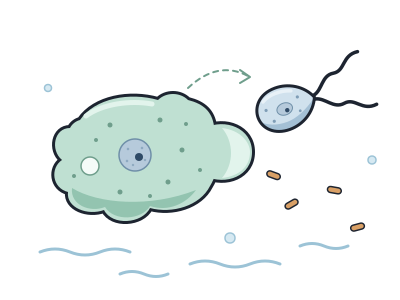
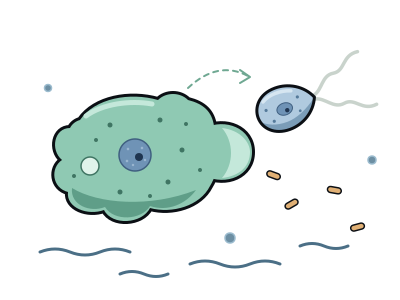
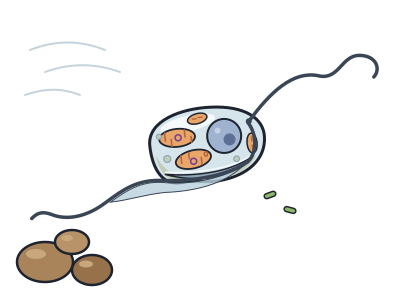
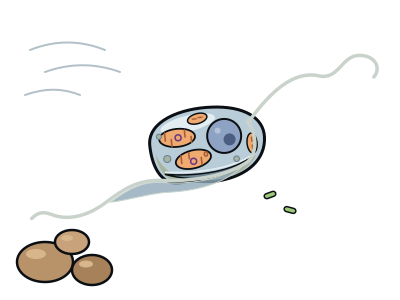
Andalucia is a single cell about 3 to 5 thousandths of a millimetre long, far too small to see without a microscope. It lives in soil and swims with two whip-like tails, each about twice its body length. It sweeps bacteria into a groove on its underside to eat them. On the tree it sits near Euglena, the sleeping sickness parasite and the brain-eating amoeba. Those three are closer cousins to each other than to Andalucia. Unlike the parasite and the amoeba, Andalucia is harmless.
Genes found nowhere else
Two of its mitochondrial genes, one for building part of a ribosome and one for making an energy enzyme, have not been found in the mitochondria of any other eukaryote. In other eukaryotes, these genes sit in the nucleus instead.
Rolling up to wait
In the lab it readily turns into round resting cysts, a simple, quiet form of the cell.
A small but long recipe book
Its mitochondrial DNA is about 97,000 DNA letters long. That is tiny next to a free-living bacterium's DNA, but big for a mitochondrion.
Next to it on the tree
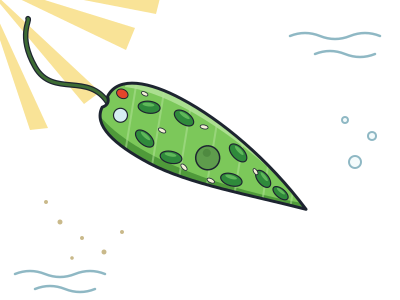
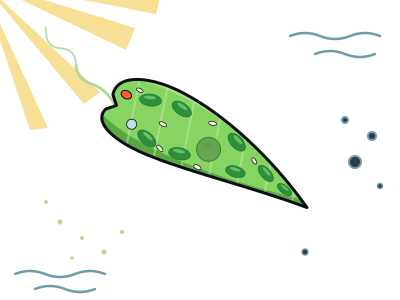
- EuglenaHalf plant, half animal: it photosynthesises in sunlight and swallows food in the dark.
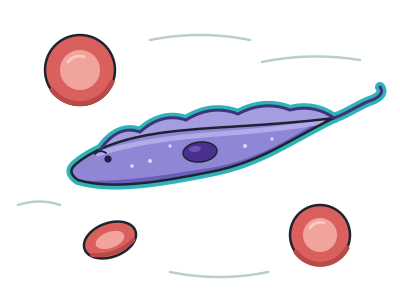
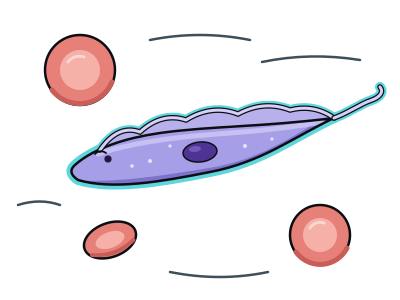
- Sleeping sickness parasiteSpread by tsetse flies, it keeps changing its coat so your immune system cannot catch up.
- Brain-eating amoebaA warm-water amoeba that can switch to swimming with tails; infections are very rare but serious.