A species
Sleeping sickness parasite
Trypanosoma brucei
A tiny swimmer spread by tsetse flies that keeps switching coats to stay one step ahead of your immune system.
You and the sleeping sickness parasite meet in the Eukaryotes branch, shown at about 1.8 billion years ago (on 28 July, in a calendar from life's shared ancestor to today).
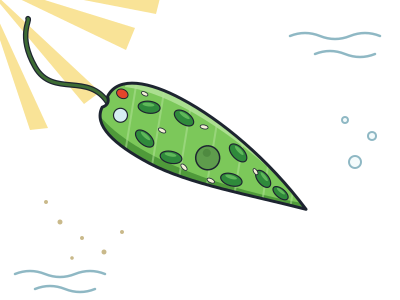
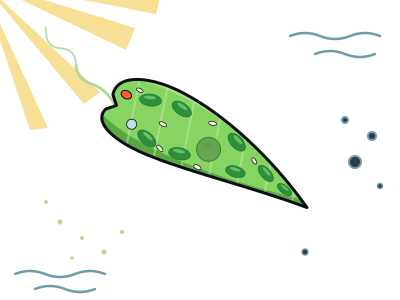
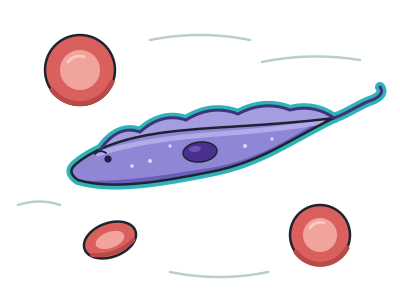
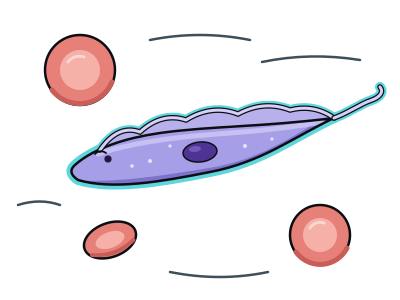
This tiny single cell gets into people and other mammals through the bite of a tsetse fly. The fly feeds on blood and lives only in Africa south of the Sahara. Once the parasite is in the blood, it uses a clever trick. Its surface is wrapped in a dense coat made almost entirely of one kind of protein, with about 10 million copies packed together.
Your immune system learns to recognise that coat and usually clears those parasites within about a week. But now and then, a few parasites switch to a different coat. The immune system does not recognise the new coat, so those parasites survive and multiply. The number of parasites in the blood rises and falls in wave after wave, and the infection can last for months or years. The parasite does not choose to switch. It happens by chance in a few cells, and the body kills the ones still wearing the old coat.
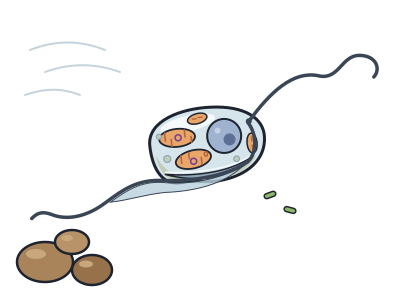
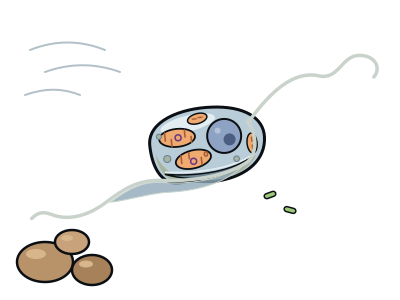
Surprisingly, its relatives include Euglena, a green cell that lives in ponds and uses sunlight like a plant. Both have a stiffening rod running alongside their whip-like tail. Yet the trypanosome's own close family are all parasites.
Without treatment, sleeping sickness is usually deadly. Fever comes first. Later the parasite reaches the brain and disturbs sleep. Reported cases have fallen from nearly 40,000 in 1998 to fewer than 1,000 a year since 2018.
A huge wardrobe
It carries more than 1,000 coat genes but switches on only one at a time. About 400 of them are complete. Pieces of the broken ones can be mixed together to make brand-new coats.
Swallowing the evidence
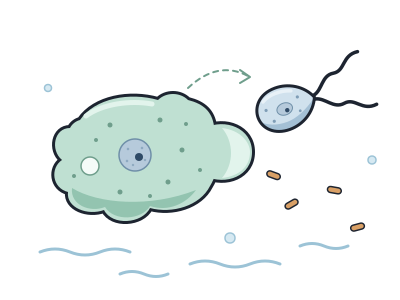
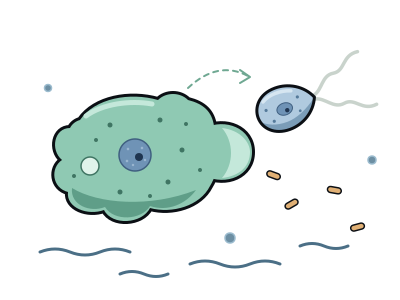
It keeps swallowing its own coat through a pocket at the base of its tail. Antibodies stuck to the coat get swept to this pocket faster than bare coat, so the parasite can pull them inside and destroy them.
Two forms, two speeds
The form found in west and central Africa causes most cases and makes people ill slowly, over months to more than a year. The form found in eastern and southern Africa can make people seriously ill within weeks.