A species
Brain-eating amoeba
Naegleria fowleri
A shape-shifting cell of warm water that can sprout two tails and swim
You and the brain-eating amoeba meet in the Eukaryotes branch, shown at about 1.8 billion years ago (on 28 July, in a calendar from life's shared ancestor to today).
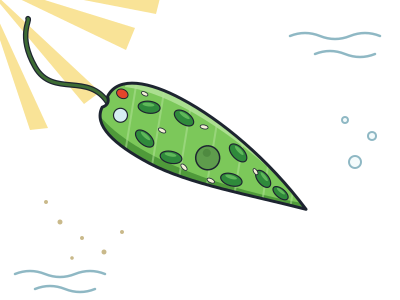
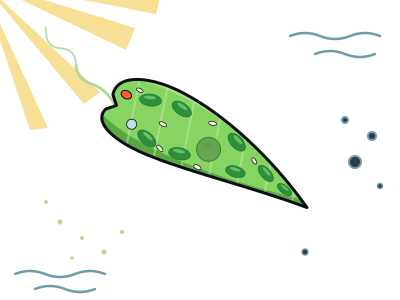
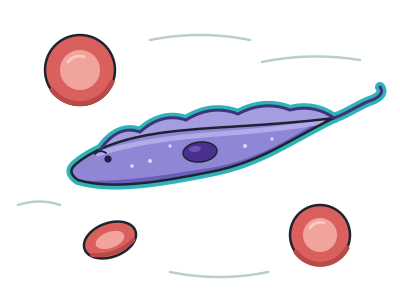
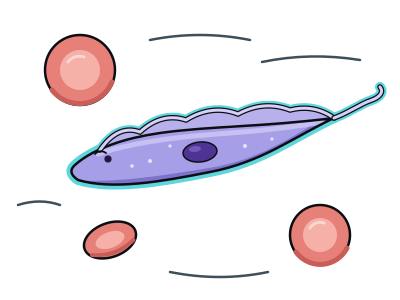
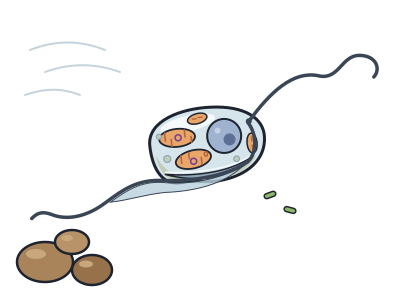
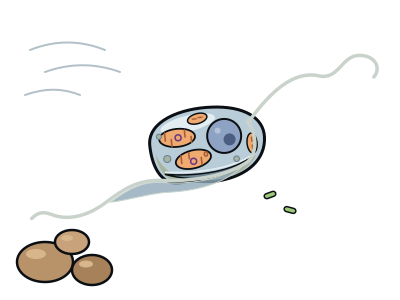
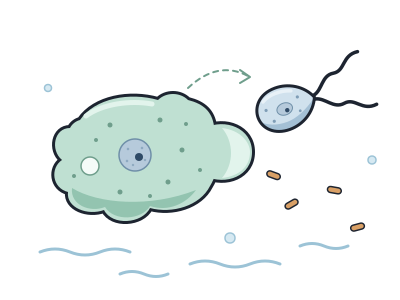
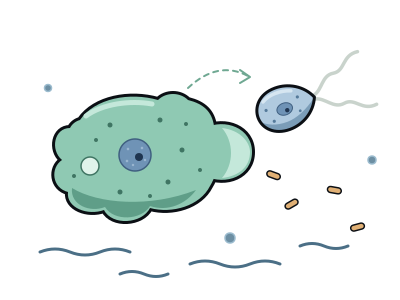
This tiny single cell lives in warm fresh water all over the world, in lakes, rivers and hot springs. Most of the time it is a crawling blob. It pushes out rounded bulges to move along and eat bacteria. But it has a surprising trick. It can reshape itself into a pear-shaped swimmer with two whip-like tails. The swimmer does not eat. Later it usually drops its tails and goes back to crawling.
That tail trick is a family clue. Being called an amoeba does not make it a close relative of the familiar pond amoeba. 'Amoeba' just describes its blob shape. It belongs to a separate group of single-celled life, and many members of that group switch between a blob shape and a shape with tails. That group's close relatives include Euglena and the parasite that causes sleeping sickness.
It is famous for causing a rare but very serious brain infection. This can only happen when water carrying the amoeba goes up a person's nose. You cannot catch it by swallowing water, and it does not spread from person to person. Infections are very rare: the USA reports fewer than 10 a year. But almost everyone who catches it dies. In warm fresh water, holding your nose or wearing a nose clip helps keep you safe.
Discovered in Australia
Two doctors, Malcolm Fowler and Rodney Carter, first identified it in Adelaide, South Australia, in 1965. Its scientific name honours Fowler.
Built from scratch
In its genus, turning from blob to swimmer takes about 100 minutes. The cell builds its tails and their support structure from nothing. Changing back usually takes less than an hour.
Loves the heat
It can live in water up to about 46 °C. That is hotter than a very hot bath. This is why most infections happen in summer, after long spells of hot weather warm up the water.