A species
Euglena
Euglena gracilis
A tiny green cell that makes food in sunlight and soaks it up in the dark
You and the euglena meet in the Eukaryotes branch, shown at about 1.8 billion years ago (on 28 July, in a calendar from life's shared ancestor to today).
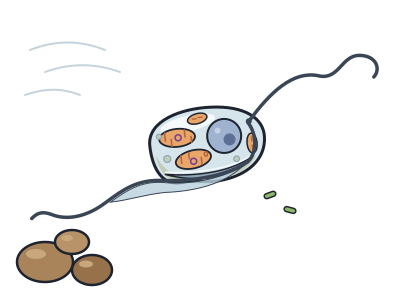
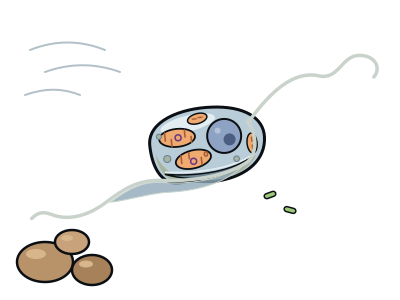
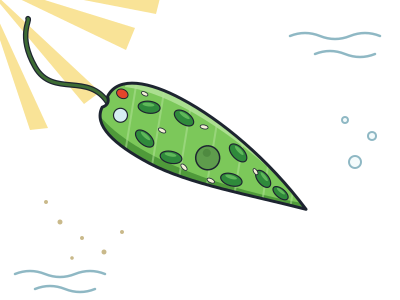
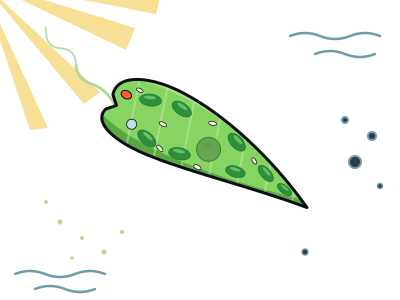
Is it a plant or an animal? Euglena is a bit of both, and really neither. In sunlight it makes its own food, just as a plant does, using small green parts called chloroplasts. In the dark it switches to feeding, mostly by soaking up food dissolved in the water around it. The whole creature is a single cell, about as long as a human hair is wide.
Here is the surprise. Its family on the tree of life is not the plant family at all. Its wider family includes trypanosomes, which are serious parasites of people and animals. One of them is the sleeping sickness parasite.
So how did Euglena become green? It got its colour second-hand. Long ago, one of its ancestors engulfed a small green alga and kept it. Over time that alga turned into Euglena's chloroplasts.
To find light, Euglena uses a red eyespot. This is not a real eye. It shades a light sensor so the cell can tell where the light is coming from. Then a whip-like tail pulls the cell towards it. Euglena has no stiff wall, so it can also squirm and change shape like an inchworm.
It broke the old rules
Scientists once sorted all life into plants and animals. Living things like Euglena seemed to be both. That helped lead the scientist Ernst Haeckel to create a third kingdom, called Protista.
Waiting out hard times
When conditions turn harsh, Euglena can build a protective wall around itself. It rests inside as a cyst until things get better.
Tough as old boots
Euglena is unusually hardy. It can even multiply in water polluted with heavy metals and acids.
Next to it on the tree
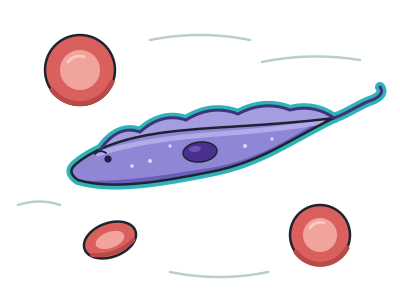
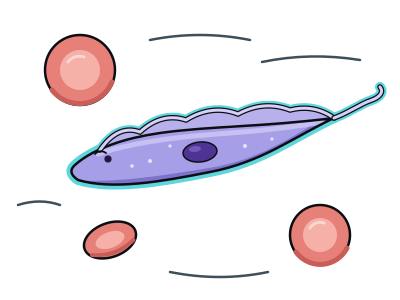
- Sleeping sickness parasiteSpread by tsetse flies, it keeps changing its coat so your immune system cannot catch up.
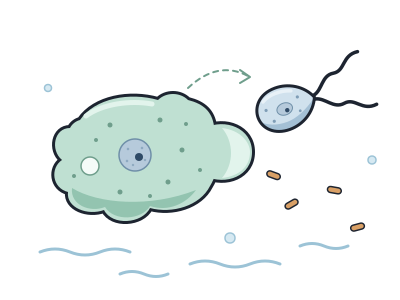
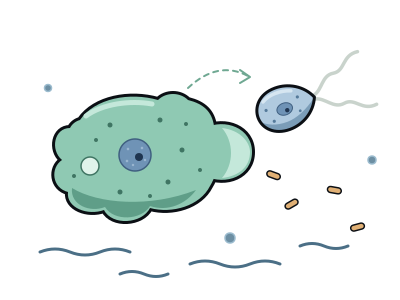
- Brain-eating amoebaA warm-water amoeba that can switch to swimming with tails; infections are very rare but serious.
- AndaluciaIts mitochondria keep more of their bacterial genes than any other known cell.