An extinct species
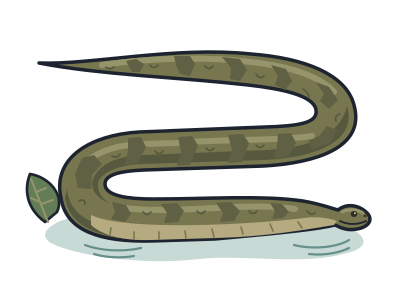
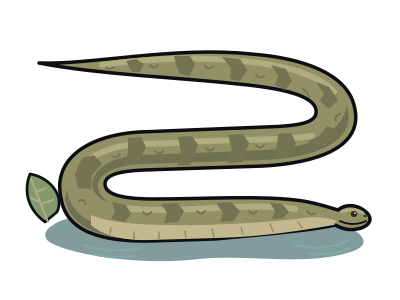
Titanoboa †
Titanoboa cerrejonensis
A bus-length boa relative from an ancient hot rainforest
Lived about 60–58 million years ago.
You and the titanoboa meet in the Amniotes branch, shown at about 320 million years ago (on 4 December, in a calendar from life's shared ancestor to today).
About as long as a bus, Titanoboa was one of the largest snakes ever found. It belonged to the boa family, making it a relative of today's green anaconda. But it was not an established ancestor of that living snake. Its enormous size was estimated from fossil bones, rather than measured from a complete skeleton.
It lived about 60 to 58 million years ago, after dinosaurs such as Tyrannosaurus had disappeared. Its home was a hot, wet rainforest with large rivers and floodplains in what became northeastern Colombia. Large turtles and crocodile relatives also lived in this landscape.
Its fossils came from the Cerrejón coal mine. Researchers compared the size and position of its backbone bones with those of living snakes to work out its length. The familiar reconstruction put it at about 13 metres, but the incomplete remains left room for uncertainty.
A heavyweight
One widely cited estimate put its weight at about 1,100 kilograms—a little over a tonne.
Broad backbone bones
Some fossil backbone bones were more than 11 centimetres wide.
Named in 2009
Scientists formally described the species in 2009.
Next to it on the tree
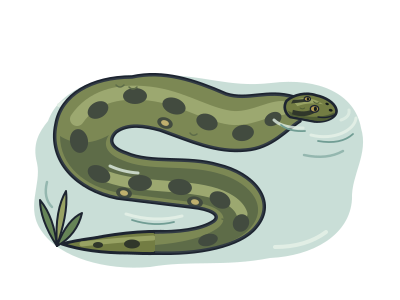
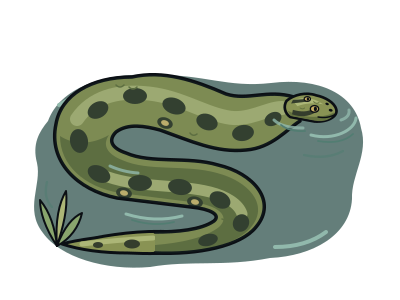
- Green anacondaThe heaviest snake alive, ambushing prey from the water.
- Boa constrictorOne of the few animals better known by its scientific name, a heavy-bodied hugger of Latin American forests.
- Emerald tree boaCoils over a branch in bright green loops, looking almost exactly like Asia's green tree python.