A species
Green anaconda
Eunectes murinus
The heaviest living snake hunts from hiding in water.
You and the green anaconda meet in the Amniotes branch, shown at about 320 million years ago (on 4 December, in a calendar from life's shared ancestor to today).
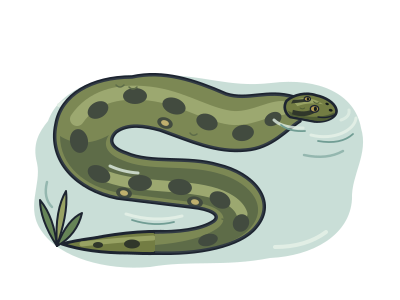
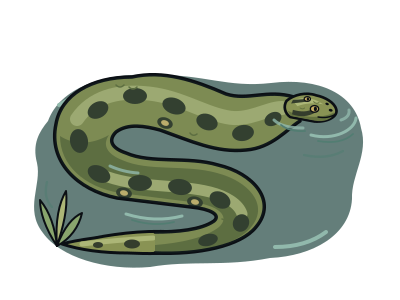
The green anaconda is the heaviest snake alive, and it hunts by hiding in water and waiting for prey. This heavyweight belongs to the boa family, not the python family. A reticulated python can grow longer: being the heaviest is not the same as being the longest.
Its eyes and nostrils sit high on its head, so it can see and breathe while the rest stays underwater. Olive colouring and dark markings help it disappear among wet plants. It lives in tropical South American freshwater wetlands, including swamps, slow-moving rivers and flooded grasslands—not the sea.
It hunts without venom, wrapping its muscular body around prey and squeezing. Young anacondas eat fish, birds and small mammals; large adults can take animals such as capybaras. They swallow their meals whole, usually headfirst. After a large meal, an anaconda may go weeks or even months without eating again.
Traces of legs
Tiny claw-like parts near the underside of the tail are remnants of hind legs. They are more noticeable in males.
A tongue that gathers clues
The forked tongue collects chemical clues that help an anaconda find prey and mates.
Born live
Females give birth to live young rather than laying eggs outside their bodies. A litter commonly contains about 20–40 young.
Next to it on the tree
- TitanoboaThe largest snake ever found, about 13 metres long, in a hot rainforest after the dinosaurs.
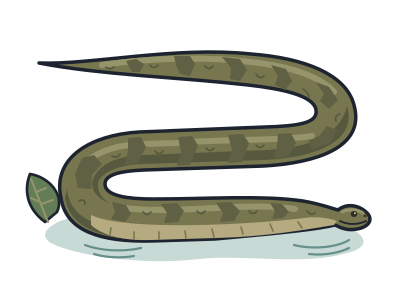
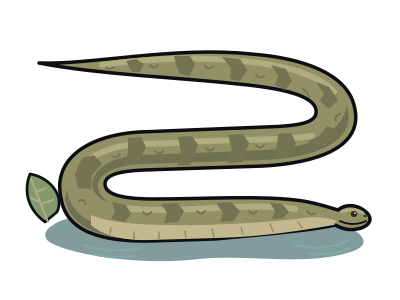
- Boa constrictorOne of the few animals better known by its scientific name, a heavy-bodied hugger of Latin American forests.
- Emerald tree boaCoils over a branch in bright green loops, looking almost exactly like Asia's green tree python.