A species
Beef tapeworm
Taenia saginata
A ribbon-like gut parasite with no mouth that can grow metres long
You and the beef tapeworm meet in the Two-sided animals branch, shown at about 580 million years ago (on 11 November, in a calendar from life's shared ancestor to today).
The beef tapeworm has no mouth and no gut of its own. It lives inside a person's small intestine and soaks up food straight through its skin. That skin is covered in tiny hair-like bits that help it absorb food. Even without a mouth, it can grow very long. Most are about 5 metres or less, roughly the length of a car, but a few have been reported at over 20 metres.
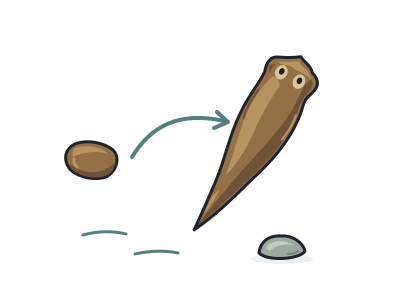
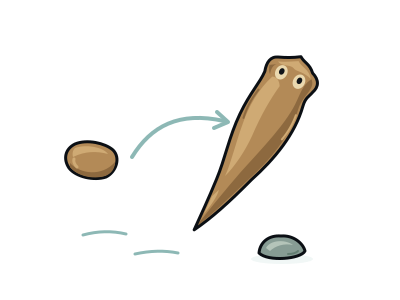
It is a flatworm. Its closer relative beside it on the tree is the blood fluke, another parasite. Tapeworms and flukes belong to one group of parasitic flatworms that evolved from free-living ancestors. The planarian, a small flatworm that glides freely through ponds and streams, is a more distant cousin.
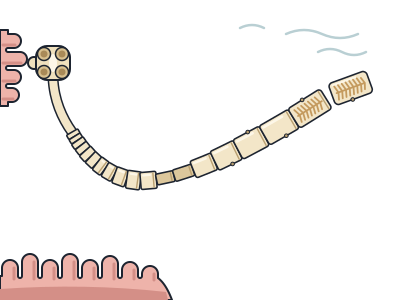
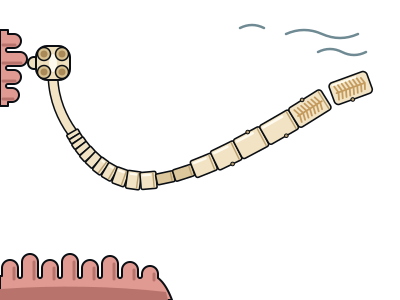
A long tapeworm is one animal, not a line of separate worms. Its tiny head grips the gut wall with four suckers. The neck behind the head keeps making new flat segments, about 1,000 to 2,000 in all. The segments get older and riper towards the tail end, and the ripest ones are full of eggs.
Its life needs two hosts. Cattle swallow the eggs while grazing, and small cysts form in their muscle. People catch it by eating raw or undercooked beef that contains these cysts. In the gut, a cyst becomes an adult in about two months, and the adult can live for years.
A huge number of eggs
A single ripe segment can hold up to about 100,000 eggs. Each segment has both male and female parts, so the worm can fertilise itself.
The diet pill myth
Stories of tapeworm diet pills are mostly a myth, and a famous poster advertising them is fake. A British doctor who swallowed tapeworm cysts on purpose actually gained weight.
No hooks
Its head has suckers but no hooks. That helps tell it apart from the pork tapeworm, which has hooks and can cause much more serious illness.
Next to it on the tree
- PlanarianCut it into pieces and each piece regrows into a whole worm.
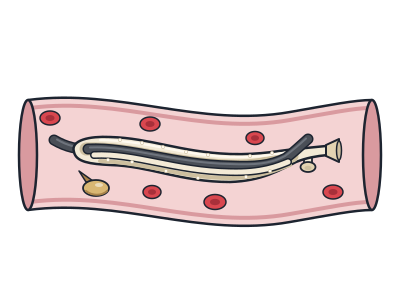
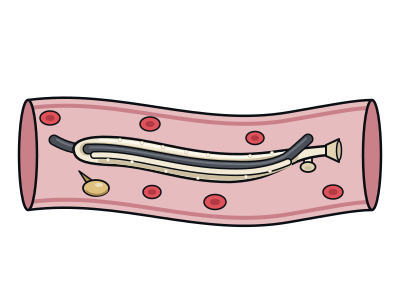
- Blood flukeA parasite that lives in blood vessels and infects millions through fresh water.
- Persian carpet flatwormA reef flatworm patterned like a rug that ripples through the water.
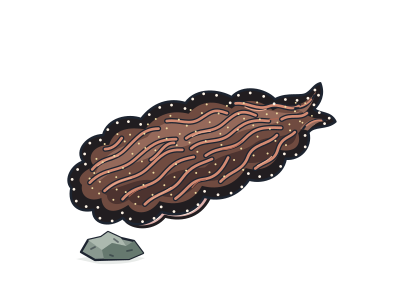
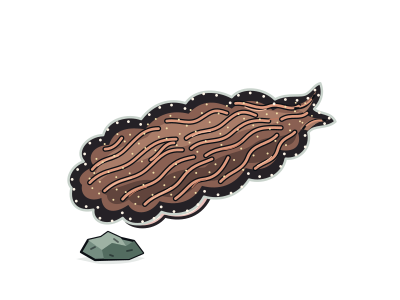
- Hammerhead flatwormA long land flatworm with a head shaped like a shovel that hunts earthworms on garden paths.