A species
Blood fluke
Schistosoma mansoni
A tiny flatworm that lives in human blood vessels and infects millions through fresh water.
You and the blood fluke meet in the Two-sided animals branch, shown at about 580 million years ago (on 11 November, in a calendar from life's shared ancestor to today).
This thin worm is only about as long as a fingernail, and it spends its adult life inside human blood vessels. People catch it from fresh water. Blood flukes like this one cause a disease called schistosomiasis, and in 2024 about 254 million people needed medicine for it. Surprisingly, it is a flatworm. That makes it a relative of the harmless planarians that glide around in ponds and the brightly coloured flatworms on coral reefs.
Its life involves two hosts: a snail and a person. Its eggs leave a person's body in their poo and hatch in lakes, rivers or irrigation channels. The young worms then get inside a freshwater snail with a flat, coiled shell, where they multiply. Tiny larvae with forked tails swim out of the snail and burrow through the skin of anyone in the water. Children who swim and fish, and women who wash clothes in infested water, are especially at risk. You cannot catch it straight from another person.
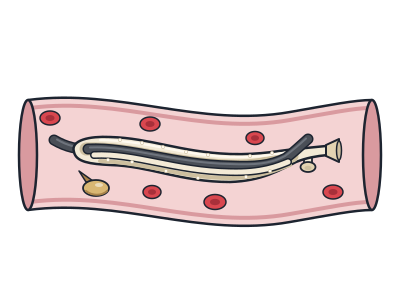
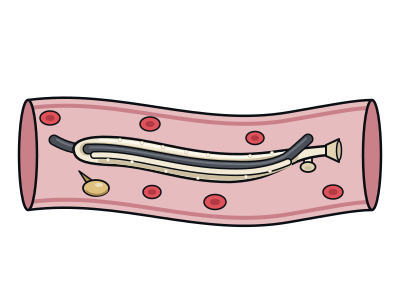
The adults live in pairs in veins near the large intestine and feed on blood. The pale male curls his body into a long groove, and the longer, darker female lies tucked inside it. Most of the harm comes from eggs that get stuck in the liver and gut. The body's defences attack them, causing swelling and scarring. A cheap, safe medicine can treat the infection.
Survivor for decades
A Swiss woman still had an active infection about 41 years after swimming in Lake Kivu in Rwanda, her only possible exposure. The worms don't multiply inside people, so the same worms must have lived that long.
Two doctors remembered
Theodor Bilharz first found blood flukes in Egypt in 1851, which is why the disease is also called bilharzia. This species was named in 1907 after the doctor Patrick Manson.
Spiky eggs
Each egg is only about 0.11 to 0.18 mm long, about the size of a fine grain of sand. It has one sharp spike sticking out from its side near one end.
Next to it on the tree
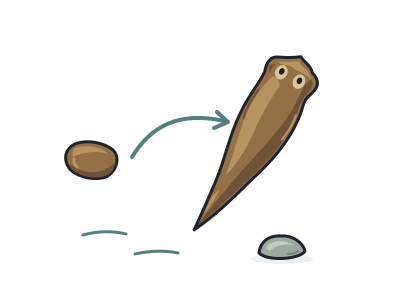
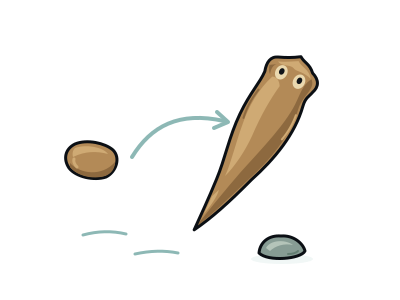
- PlanarianCut it into pieces and each piece regrows into a whole worm.
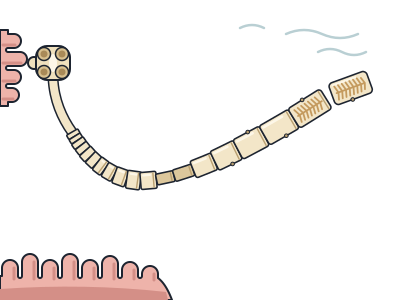
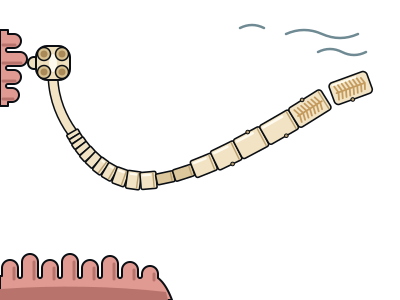
- Beef tapewormA gut parasite with no mouth or gut of its own that can grow metres long.
- Persian carpet flatwormA reef flatworm patterned like a rug that ripples through the water.
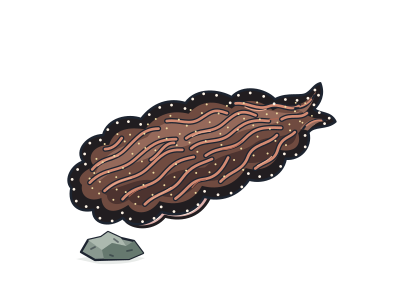
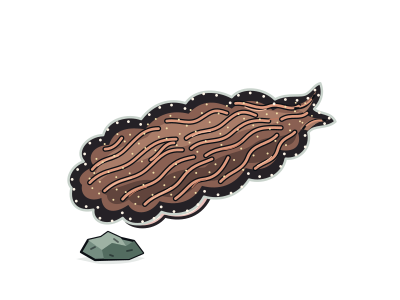
- Hammerhead flatwormA long land flatworm with a head shaped like a shovel that hunts earthworms on garden paths.