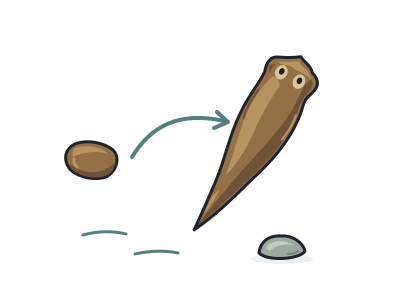
A species
Planarian
Schmidtea mediterranea
A tiny body piece can rebuild a whole worm.
You and the planarian meet in the Two-sided animals branch, shown at about 580 million years ago (on 11 November, in a calendar from life's shared ancestor to today).
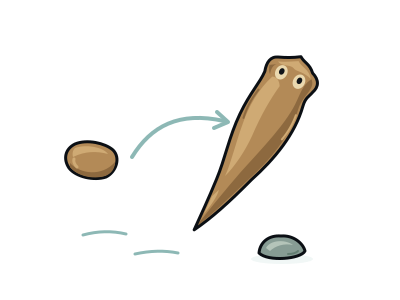
A tiny piece of this planarian’s body can regrow into a complete worm, replacing missing parts—even its head, eyes and brain. Rebuilding can take about two weeks. It belongs to the same broad flatworm group as tapeworms and blood flukes. Unlike those relatives, it lives freely rather than depending on life inside another animal.
Its rebuilding power depends on stem cells: cells whose descendants can become the different tissues it needs. Some forms of this species naturally divide into two parts, and each part replaces what is missing. This remarkable ability is not shared by every flatworm; some relatives cannot replace a lost head.
Its body can also grow or shrink depending on how much food is available. This mainly changes the number of cells, not their size. Look for this small worm in freshwater around the western Mediterranean, not in the sea. Freshwater planarians hunt small animals or eat animal remains rather than grazing on plants.
Light detectors
Its two dark eyespots detect light, but do not provide detailed vision like human eyes.
A hidden mouth
Its mouth is underneath its body, not on its head. Undigested food leaves through the same opening.
Gliding on tiny hairs
Tiny beating hairs on its underside help it glide across surfaces.
Next to it on the tree
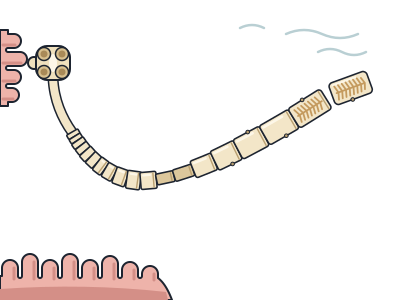
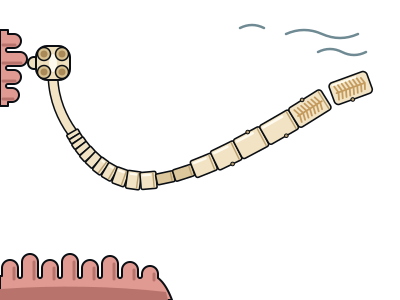
- Beef tapewormA gut parasite with no mouth or gut of its own that can grow metres long.
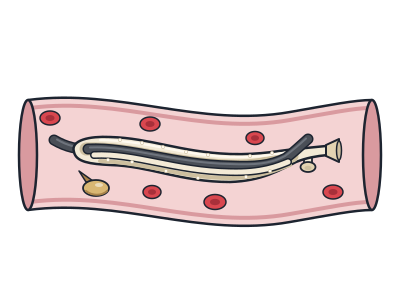
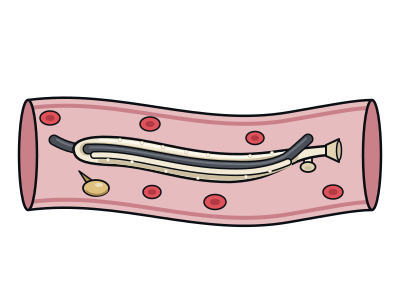
- Blood flukeA parasite that lives in blood vessels and infects millions through fresh water.
- Persian carpet flatwormA reef flatworm patterned like a rug that ripples through the water.
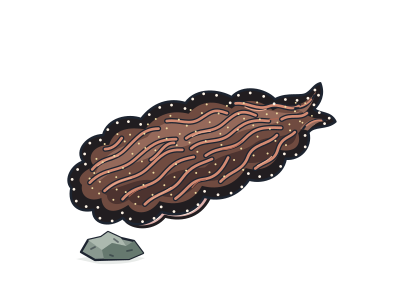
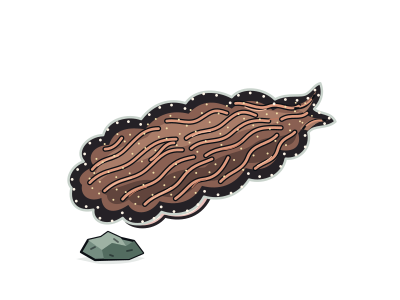
- Hammerhead flatwormA long land flatworm with a head shaped like a shovel that hunts earthworms on garden paths.