A species
Star-nosed mole
Condylura cristata
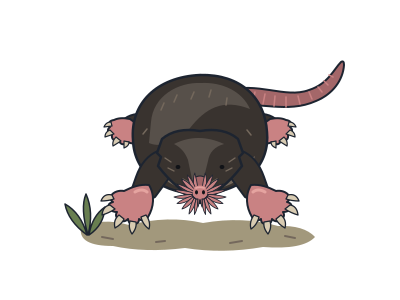
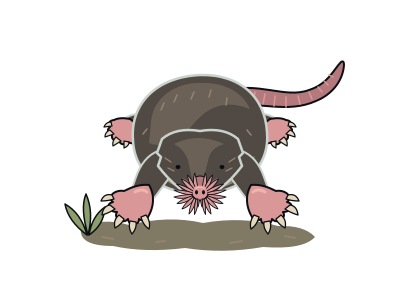
A mole that explores the world with a star-shaped nose.
You and the star-nosed mole meet in the Placental mammals branch, shown at about 95 million years ago (on 23 December, in a calendar from life's shared ancestor to today).
Its nose has 22 fleshy tentacles, arranged like a pink star with 11 feelers on each side. The Natural History Museum describes its sense of touch as the best of any mammal. Despite its strange face, this is a member of the mole family, related to the European mole beside it on the tree. No other living mole has this star.
About 25,000 tiny touch organs cover the star, supplied by about 100,000 nerve fibres. The central pair of feelers checks objects in fine detail, rather as the centre of our vision does. These feelers explore by touch: they are not little fingers for picking things up.
Its home is wet ground in eastern North America, including marshes, wet meadows and stream banks. It tunnels and swims, finding food both underground and underwater. Meals include worms, water-dwelling insect young and snails, with occasional small fish. Some of its tunnels open straight into water, connecting its underground routes to underwater feeding grounds.
Sniffing underwater
It follows smells underwater by blowing out air bubbles and drawing them back into its nostrils.
Swimming beneath ice
It stays active in winter and has been seen swimming beneath pond ice.
Waterproof fur
Its short, waterproof coat is dark brown to black above and lighter underneath.
Next to it on the tree
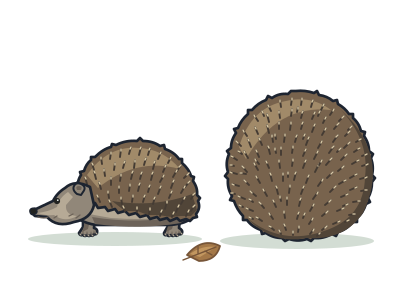
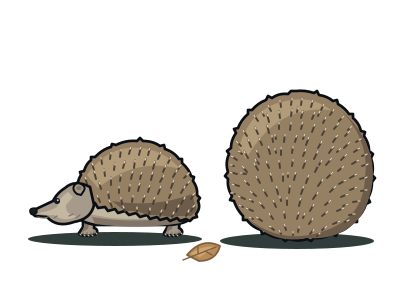
- European hedgehogRolls into a ball of about 6,000 spines.
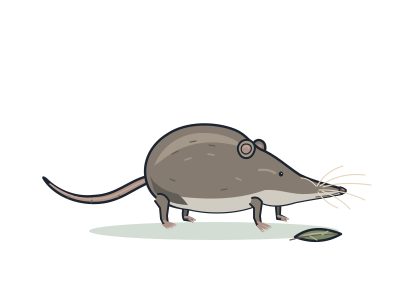
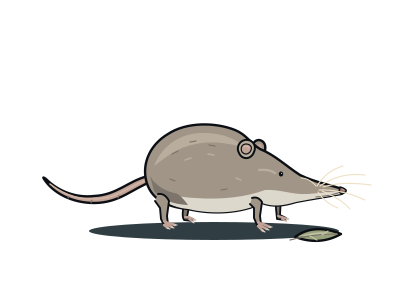
- Etruscan shrewAt about 2 grams, it is the lightest living mammal; the smallest by length is a different animal.
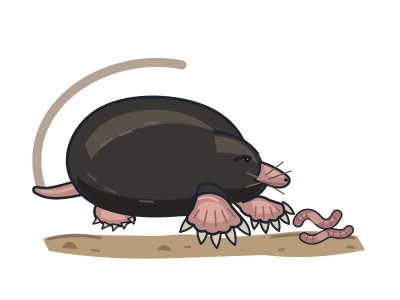
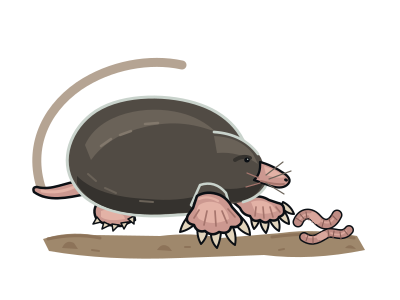
- European moleStores live worms in a larder, paralysed with a bite to the head.
- Hispaniolan solenodonA shrew-like Caribbean survivor with venomous saliva delivered through grooved teeth.
- Pyrenean desmanA swimming mole relative with a long, twitchy trunk-like nose for finding food in streams.
- Northern short-tailed shrewA North American shrew with venomous saliva that helps it subdue prey bigger than itself.
- Eurasian water shrewDives in streams with fringes of stiff hairs on its feet and tail used like paddles.