A species
European hedgehog
Erinaceus europaeus
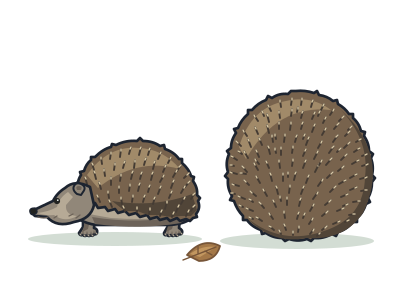
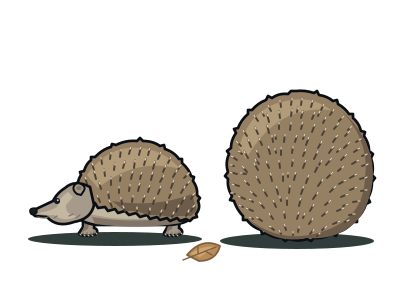
About 6,000 spines, tucked into one defensive ball.
You and the european hedgehog meet in the Placental mammals branch, shown at about 95 million years ago (on 23 December, in a calendar from life's shared ancestor to today).
With about 6,000 spines, a European hedgehog can turn itself into a prickly ball. When threatened, it curls up, hiding its face and soft belly behind outward-pointing spines. Its family connections are less obvious than its coat: the moles and shrews beside it on the tree belong to the same branch of the mammal family.
Each spine is a changed hair, about 25 millimetres long. The spines cover its back and sides, rather than its whole body. Curling up brings this prickly covering around the parts that would otherwise be exposed.
It usually searches for food at night and rests in a nest by day. During winter hibernation, its body temperature and heart rate fall, so it needs less energy. It survives largely on fat stored before winter.
A busy night
It can travel about 1–2 kilometres in a night, visiting several gardens.
More than slugs
Its main foods include beetles, caterpillars and earthworms. It also eats slugs and other small animals.
A softer side
Its face, chest, belly, throat and legs carry coarse grey-brown fur.
Next to it on the tree
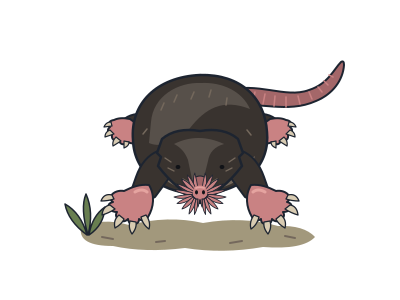
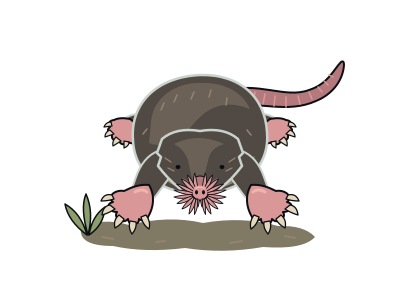
- Star-nosed moleIts 22 fleshy nose feelers carry thousands of touch organs, supporting an exceptional sense of touch.
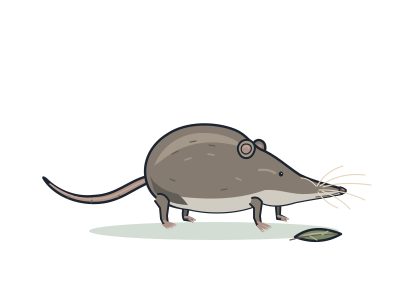
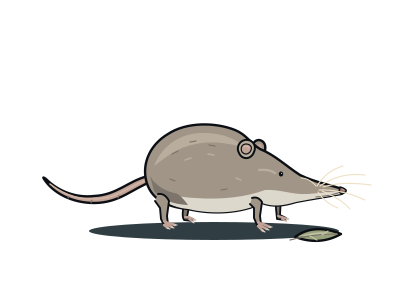
- Etruscan shrewAt about 2 grams, it is the lightest living mammal; the smallest by length is a different animal.
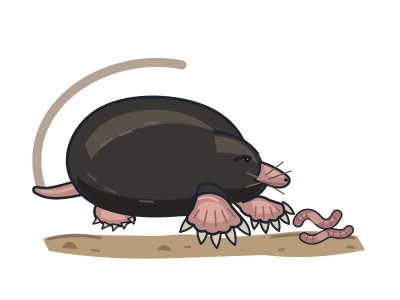
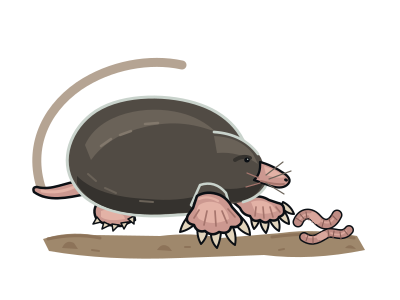
- European moleStores live worms in a larder, paralysed with a bite to the head.
- Hispaniolan solenodonA shrew-like Caribbean survivor with venomous saliva delivered through grooved teeth.
- Pyrenean desmanA swimming mole relative with a long, twitchy trunk-like nose for finding food in streams.
- Northern short-tailed shrewA North American shrew with venomous saliva that helps it subdue prey bigger than itself.
- Eurasian water shrewDives in streams with fringes of stiff hairs on its feet and tail used like paddles.