A group of living things
Newts and fire salamanders
Salamandridae
Many have toxic skin and bright warning colours, and newts return to ponds each spring to breed.
This branch is shown at about 85 million years ago; its age is a rough estimate.
You and newts and fire salamanders meet in the Four-limbed animals branch, shown at about 350 million years ago (on 1 December, in a calendar from life's shared ancestor to today).
Compare with something else
Many have toxic skin and bright warning colours, and newts return to ponds each spring to breed.
The full page for Newts and fire salamanders is still being written and drawn.
Inside newts and fire salamanders
- Great crested newtMales grow a jagged crest like a tiny dragon during the breeding season.
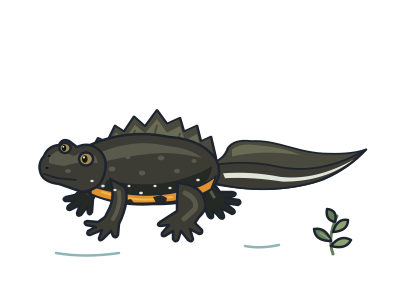
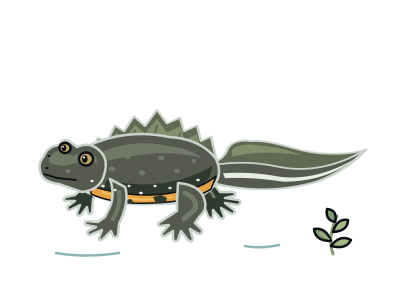
- Fire salamanderBlack and yellow warning colours advertise poison glands on its skin.
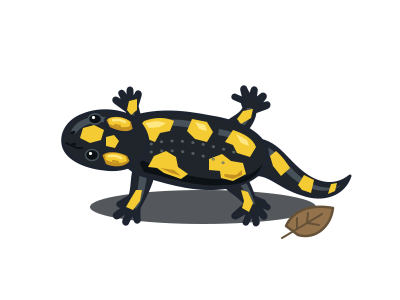
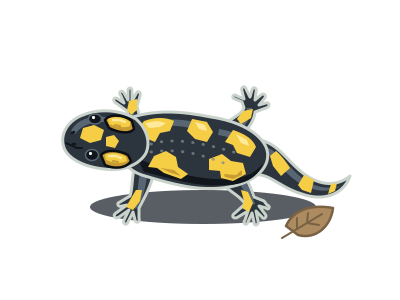
- Eastern newtSpends its teenage years on land as a bright orange 'red eft' before returning to water.
- Rough-skinned newtCarries one of the strongest animal toxins, locked in an arms race with the garter snakes that eat it.
Next to it on the tree
- AxolotlA salamander that never grows up and can regrow legs, and even parts of its heart.
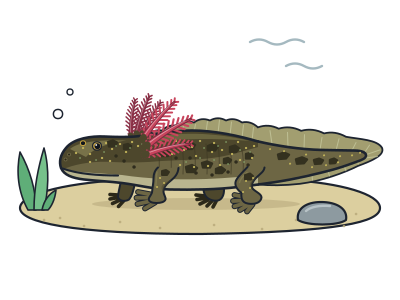
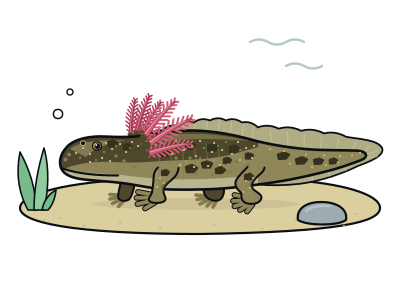
- OlmsCave salamanders with slow lives: a long-term study predicted that some could live beyond a century.
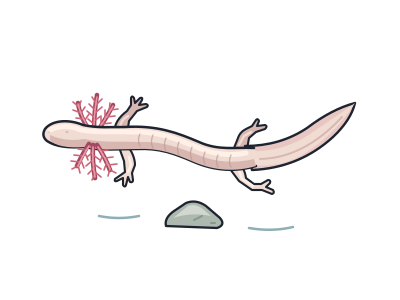
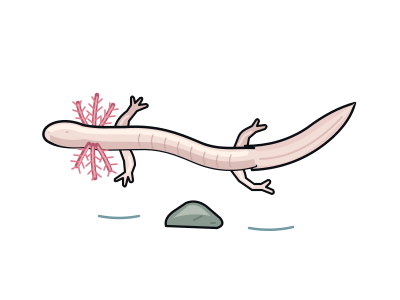
- Giant salamandersThe largest amphibians alive, ancient-looking river dwellers that have changed little in 160 million years.
- Red-backed salamanderHas no lungs at all and breathes entirely through its skin under logs and leaves.
- Spotted salamanderIts eggs turn green with algae living inside them, a rare sun-powered partnership with a backboned animal.
- Greater sirenAn eel-like salamander with tiny front legs, no back legs and feathery gills.