A species
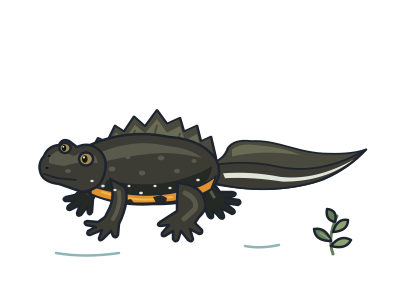
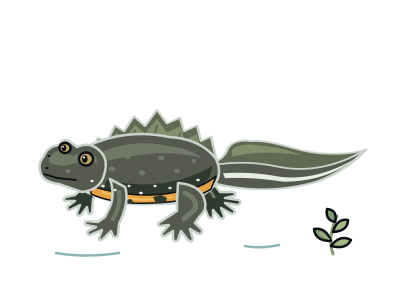
Great crested newt
Triturus cristatus
Breeding males sport a jagged crest like a tiny dragon.
You and the great crested newt meet in the Four-limbed animals branch, shown at about 350 million years ago (on 1 December, in a calendar from life's shared ancestor to today).
In spring, male great crested newts grow a tall, jagged crest along their backs, looking like tiny dragons. But a newt is a salamander, not a lizard. Its wider group includes axolotls, olms, fire salamanders and giant salamanders: very different-looking animals connected on the tree of life.
These newts breed in ponds in spring. A female lays hundreds of eggs over the breeding season, placing each one inside a folded leaf of a pond plant. The pond is a nursery, but it is only part of their home.
Adults spend much of the rest of the year feeding on land, in places such as woodland, hedgerows and rough grassland. Underground spaces, tree roots and gaps in old walls provide winter shelter. Protecting this little dragon means looking after both ponds and the surrounding land. Across Europe, populations have declined mainly because ponds have disappeared or become less suitable.
Britain's biggest native newt
This is the largest of Britain's three native newt species.
A belly-pattern identity
Each animal has a distinctive pattern of black belly markings that can help researchers recognise it.
A tail-waving display
To court a female, a male raises himself on his front legs, arches his back and waves his tail.
Next to it on the tree
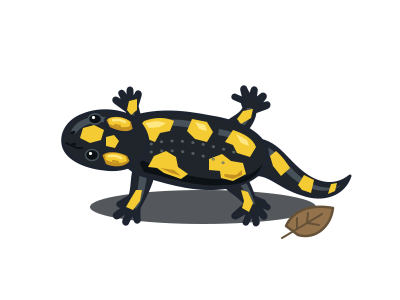
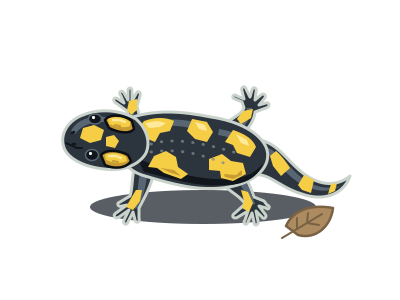
- Fire salamanderBlack and yellow warning colours advertise poison glands on its skin.
- Eastern newtSpends its teenage years on land as a bright orange 'red eft' before returning to water.
- Rough-skinned newtCarries one of the strongest animal toxins, locked in an arms race with the garter snakes that eat it.