A group of species
Olms
Proteus
Cave salamanders with extraordinarily slow lives.
You and olms meet in the Four-limbed animals branch, shown at about 350 million years ago (on 1 December, in a calendar from life's shared ancestor to today).
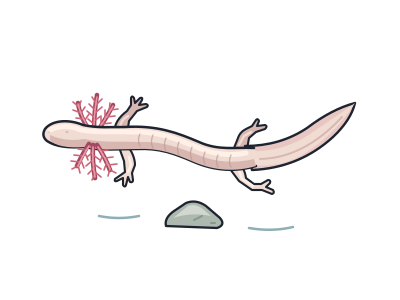
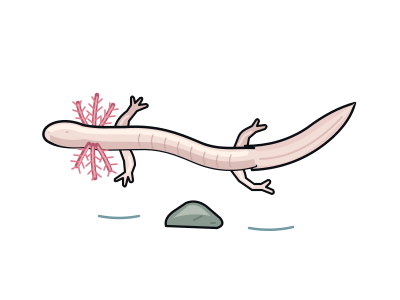
Olms are salamanders with remarkably slow lives. Their family also includes North American mudpuppies. A long-term study of captive olms predicted that some could live for more than 100 years. That was an estimate, not a measured age record.
These European animals live in fresh water, mainly underground in limestone country. Some also venture into surface springs. They eat, rest and breed underwater. Their prey includes small shrimps, insects and snails. Many olms are pale and have poorly developed eyes. But the black olm has dark skin and well-developed eyes. The pale animal shown here does not represent every species.
In 2026, researchers recognised nine species where older accounts had treated olms as one. Some have very small ranges. Stična’s olm, for example, is known only from a narrow belt of central Slovenia. Older studies followed particular populations, so their exact findings about growth and lifespan cannot be assumed to fit every species.
A slow start
In one captive study, female olms reached breeding age at about 16 years on average.
A small patch of home
In one wild population in Bosnia and Herzegovina, researchers repeatedly found olms within a few square metres over several years.
Underground is not pollution-proof
Contaminated water can threaten olms even inside their cave homes.
Next to it on the tree
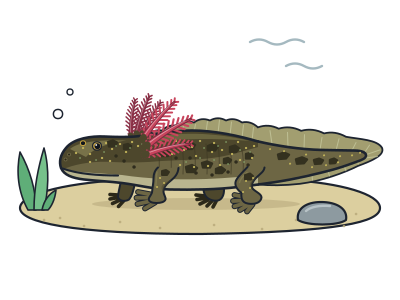
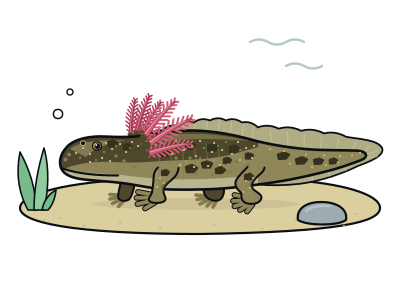
- AxolotlA salamander that never grows up and can regrow legs, and even parts of its heart.
- Giant salamandersThe largest amphibians alive, ancient-looking river dwellers that have changed little in 160 million years.
- Newts and fire salamandersMany have toxic skin and bright warning colours, and newts return to ponds each spring to breed.
- Red-backed salamanderHas no lungs at all and breathes entirely through its skin under logs and leaves.
- Spotted salamanderIts eggs turn green with algae living inside them, a rare sun-powered partnership with a backboned animal.
- Greater sirenAn eel-like salamander with tiny front legs, no back legs and feathery gills.