A species
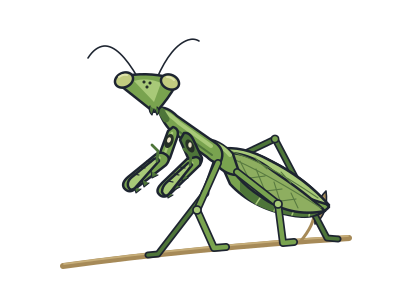
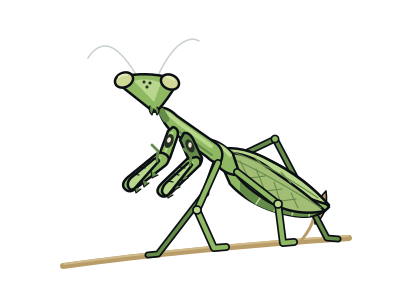
European mantis
Mantis religiosa
An ambush hunter that can look over its shoulder.
You and the european mantis meet in the Two-sided animals branch, shown at about 580 million years ago (on 11 November, in a calendar from life's shared ancestor to today).
The European mantis is an ambush hunter that can turn its head to look over its shoulder. Its flexible neck lets its triangular head turn through up to about half a circle. This watchful hunter belongs to the same wider insect group as cockroaches and termites, despite their very different shapes and ways of life.
It hunts mainly by sight, turning its head to follow passing insects. Rather than chasing every meal, it waits until prey comes within reach. Then its folded front legs strike out. Rows of spines help hold the catch. Those legs can even catch flies in flight: the familiar praying pose is really hunting equipment.
Green, tan or brown colouring helps it blend into vegetation. It favours warm, dry places among grasses, low plants and shrubs. European mantises usually live alone. People introduced them to North America, where they are now widely established.
Five eyes
Its head has two large eyes and three tiny eyes between its antennae.
Longer feelers
Males are smaller and slimmer than females, but have longer antennae.
Foam-wrapped eggs
Females surround their eggs with foam that hardens into a protective case.
Next to it on the tree
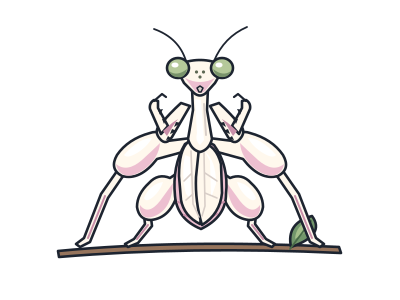
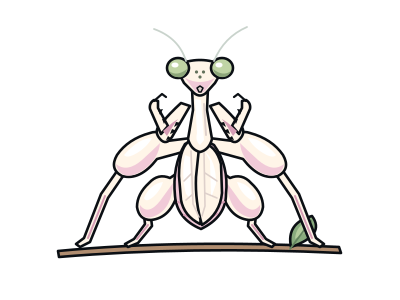
- Orchid mantisLooks like a pink flower and catches the insects that come to it.
- Chinese mantisA large mantis sold to gardeners, now common in North America after arriving in 1896.
- Devil's flower mantisOne of the largest mantises, flashing red, white and blue forelegs when threatened.
- Ghost mantisA small mantis that looks like a crumpled dead leaf.
- Dead leaf mantisIts wide body shield and wings make it look like a dry brown leaf.
- Cockroaches and termitesTermites are cockroaches that went social; their closest kin are wood-eating roaches.