A species
Frilled lizard
Chlamydosaurus kingii
An umbrella-like frill, then a two-legged getaway.
You and the frilled lizard meet in the Amniotes branch, shown at about 320 million years ago (on 4 December, in a calendar from life's shared ancestor to today).
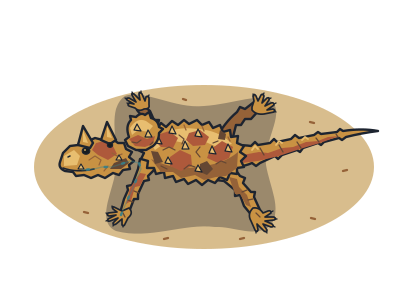
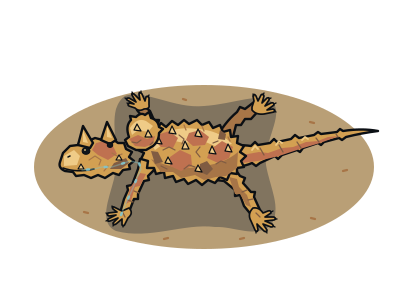
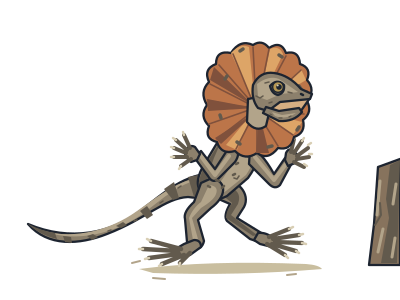
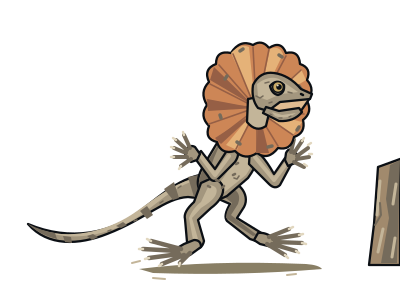
The frilled lizard opens a huge, umbrella-like frill when threatened—and can run away on its hind legs. It shares the dragon-lizard family with the very different-looking thorny devil. One wears a broad fan of skin around its neck; the other has a covering of spikes.
The frill usually lies folded back against the body. When danger approaches, the lizard can spread it and open its mouth, making itself look bigger and more threatening. Flexible rods support the frill rather like umbrella spokes. If the display does not settle things, it can race away on two legs and climb a nearby tree.
Away from this dramatic display, it spends much of its time on tree trunks and branches. Rough, patterned grey-brown skin helps it blend into bark. Its home stretches across northern Australia and southern New Guinea, in grassy woodlands and dry forests. It mainly eats insects, spiders and other small animals without backbones.
Mostly tail
About two-thirds of its total length is tail.
Ready from hatching
Newly hatched frilled lizards look after themselves and can already perform the open-mouth frill display.
Daytime activity
Frilled lizards are active during daylight rather than hunting at night.