A species
Common eastern firefly
Photinus pyralis
A beetle with a flashing belly
You and the common eastern firefly meet in the Two-sided animals branch, shown at about 580 million years ago (on 11 November, in a calendar from life's shared ancestor to today).
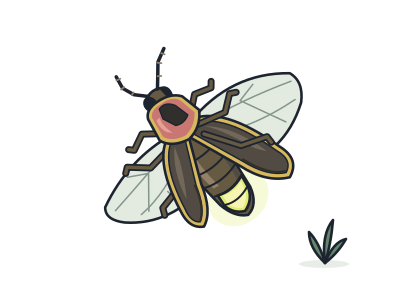
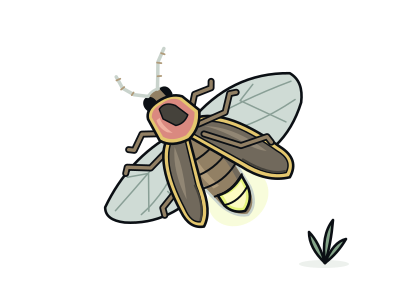
The common eastern firefly is a beetle that flashes light from its belly to find a mate. Despite its name, it belongs with ladybirds, stag beetles and the other beetles beside it on this tree, not with true flies.
At dusk, a male swoops through the air as he flashes, making a J-shaped trail of light. A female usually waits on a low plant and answers with a short flash. If he spots her reply, he moves closer and they repeat the exchange. She can also stop replying rather than continue.
The light comes from a chemical reaction inside the beetle, not from sunshine saved during the day. It gives off very little heat. These beetles live in grassy openings, gardens and woodland edges across much of eastern North America. You do not have to visit remote countryside to look for them.
Four wings, not two
Adults have two protective outer wing covers and two flying wings folded beneath. True flies have only one pair of wings.
Glowing youngsters
The crawling young can glow before they become winged adults.
Winter underground
The young live on or beneath damp ground and spend winter in the soil.
Next to it on the tree
- Synchronous fireflyThousands flash in unison in the Smoky Mountains each June.
- Glow-wormWingless females glow green in the grass on summer nights to call flying males.
- Headlight beetleA click beetle with two glowing spots like car headlights.
- Railroad wormGlows red at the head and green along its sides, like a train at night.