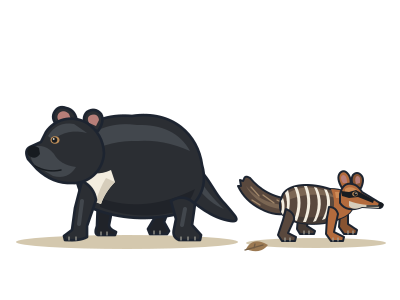
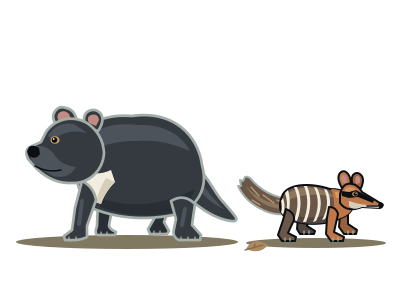
A group of living things
Marsupial meat-eaters
Dasyuromorphia
Devils, quolls and termite-eating numbats share a surprising family branch.
This branch is shown at about 35 million years ago; its age is a rough estimate.
You and marsupial meat-eaters meet in the Live-bearing mammals branch, shown at about 160 million years ago (on 18 December, in a calendar from life's shared ancestor to today).
Australia’s pouched hunters include devils and quolls—but their family branch also holds the termite-eating numbat and the lost thylacine. All belong to the marsupials, alongside kangaroos and wombats. Yet a pouch is not a membership badge: female numbats have none. Their place here comes from their ancestry, not a checklist of body features.
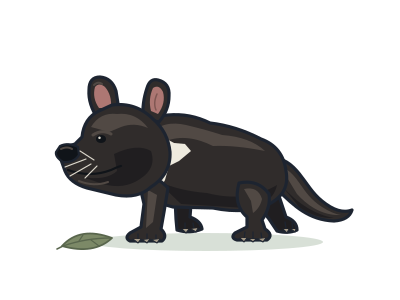
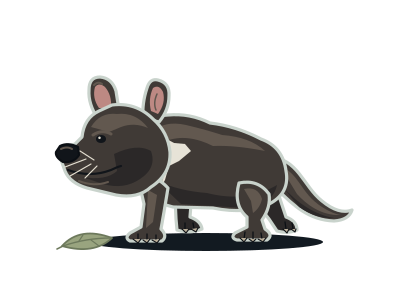
A Tasmanian devil shows one way of making a living in this group. It usually shelters by day and searches for food at night. Devils both hunt and eat animals they find already dead. Their varied menu includes mammals, birds, reptiles and insects. Devils and quolls belong to the same family within this larger branch.
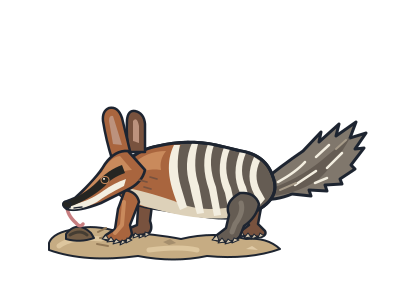
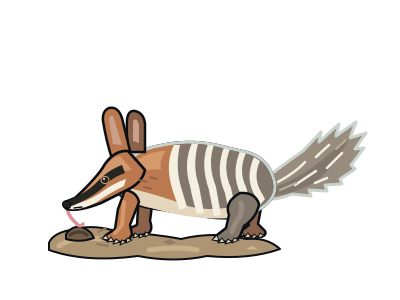
The numbat takes a different approach. It specialises in termites and is active in daylight, with feeding times following the termites’ daily movements. So “meat-eater” here does not mean every member hunts large animals. A termite specialist and a devil can look and live very differently while still belonging to the same branch.
Tiny relatives
The long-tailed planigale belongs to this group and weighs about 4 grams.
Young tree-climbers
Young devils can climb trees and are more agile than adults.
No breaking into mounds
Numbats cannot break into hard termite mounds. They feed where termites are easier to reach.
Inside marsupial meat-eaters
- Tasmanian devilThe largest living marsupial meat-eater, with one of the strongest bites for its size.
- ThylacineThe striped "Tasmanian tiger" looked like a wolf but carried its young in a pouch.
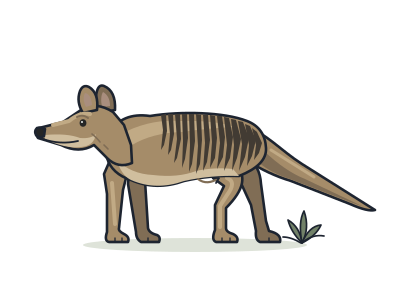
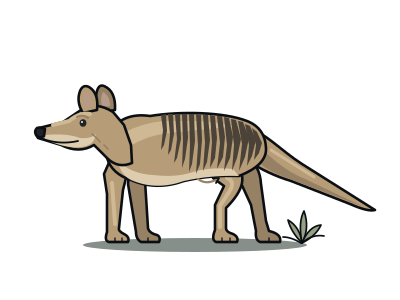
- NumbatA striped termite-eater that licks up about 20,000 termites a day.
- Spotted-tailed quollA spotted, cat-sized marsupial hunter that climbs trees, cousin to the Tasmanian devil.
Next to it on the tree
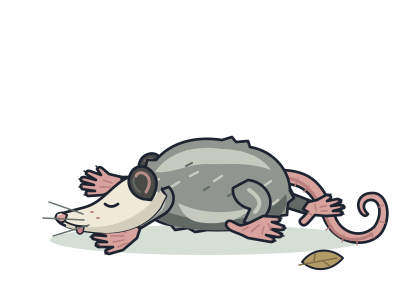
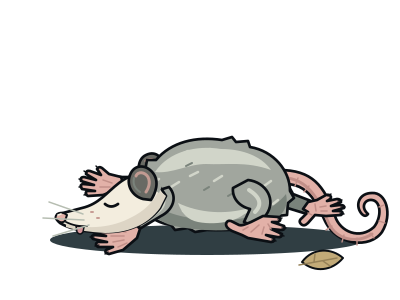
- Virginia opossumThe only living marsupial north of Mexico, famous for an involuntary playing-dead response.
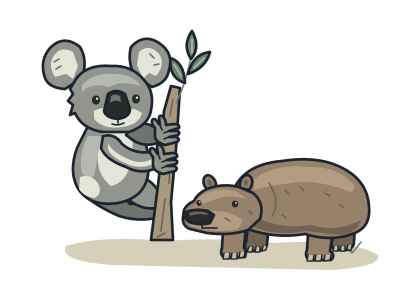
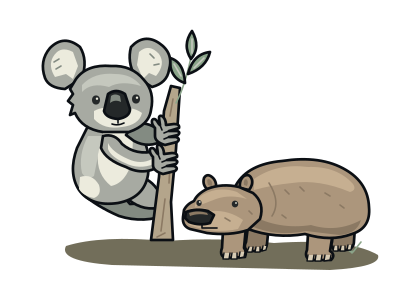
- Kangaroos, koalas and wombatsThe koala's closest living relative is the wombat.
- Greater bilbyA long-eared desert digger that Australians promote as the Easter Bilby instead of the rabbit.
- Monito del monteA tiny South American marsupial whose closest relatives live in Australia, not next door.