An extinct species
Thylacine †
Thylacinus cynocephalus
Wolf-like looks, pouch-bearing family
Lived about 2–0 million years ago.
You and the thylacine meet in the Live-bearing mammals branch, shown at about 160 million years ago (on 18 December, in a calendar from life's shared ancestor to today).
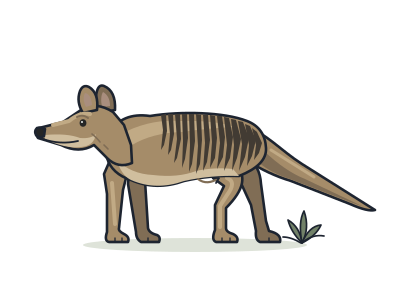
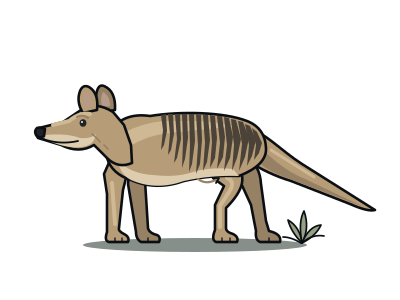
The striped “Tasmanian tiger” looked like a wolf, but females carried their young in a pouch. It was a marsupial, a mammal from a group whose young are born very undeveloped. Tasmanian devils were among its relatives, despite looking less like it than wolves did. Its wolf-like outline was not a reliable guide to its family.
It lived during the Ice Age and survived into the 1900s. Its former home included mainland Australia, New Guinea and Tasmania. Fossil evidence included a skull from Wellington Caves in New South Wales. Preserved skins, bodies and photographs provided separate evidence of its appearance: that striped coat was not simply guessed from ancient bones.
Tasmania became its last established refuge. European settlers hunted it as a supposed threat to livestock, and hunting and habitat destruction contributed to its extinction. The last known animal died at a Hobart zoo in 1936. Later reported sightings did not provide conclusive evidence that it survived.
Four pouch passengers
A female’s pouch opened backwards and could hold up to four young.
A toothy smile
Adults had 46 teeth.
Last of its family
It was the only species in its own family to survive into modern times.