A species
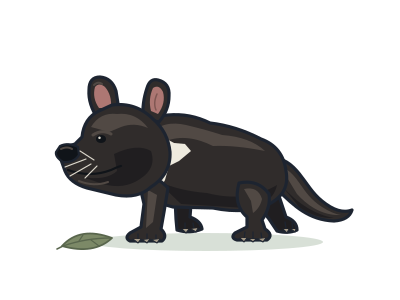
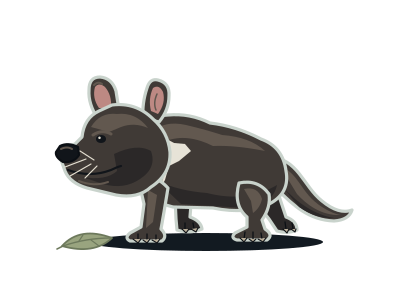
Tasmanian devil
Sarcophilus harrisii
A powerful bite in a small-dog-sized body.
You and the tasmanian devil meet in the Live-bearing mammals branch, shown at about 160 million years ago (on 18 December, in a calendar from life's shared ancestor to today).
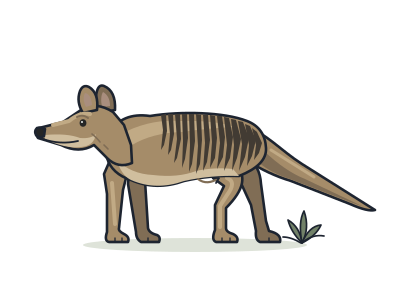
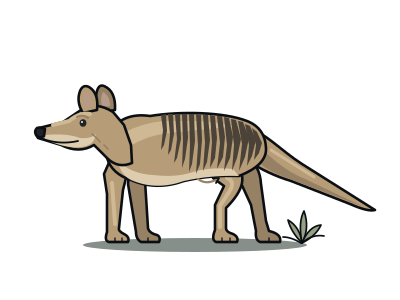
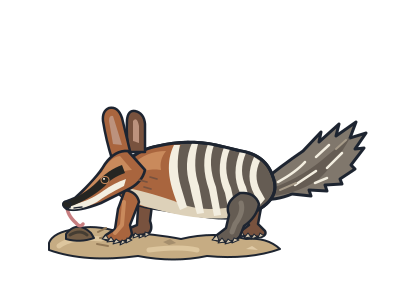
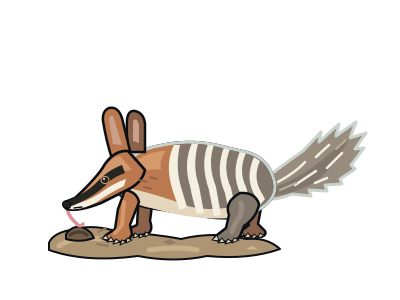
The Tasmanian devil is the largest living meat-eating marsupial, with an exceptionally strong bite for its size. It may look rather like a small dog, but its family connections tell a different story. Devils belong to the same wider branch as numbats and the extinct thylacine. Quolls are closer relatives still.
Devils mainly eat animals that have already died, though they also hunt. Their powerful jaws and teeth can tackle bones and fur as well as meat. Mostly active at night, they can travel up to about 16 kilometres in one night while searching for food. Their remaining natural populations live across Tasmania, from coastal scrub to mountain forests.
A female devil's pregnancy lasts only about three weeks. Much of her babies' early development happens afterwards, in her pouch. The pouch opens backwards, and the young stay inside for about four months before moving into a den. There are only four teats, so no more than four babies can develop in the pouch at once.
Young climbers
Young devils are agile tree climbers, despite their stocky appearance.
A cooling dip
Devils can swim. They also wade or lie in water to cool down.
Not always white-patched
Their mostly black coats often have white patches, but some devils have no white markings at all.