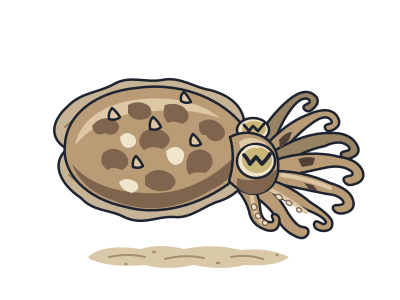
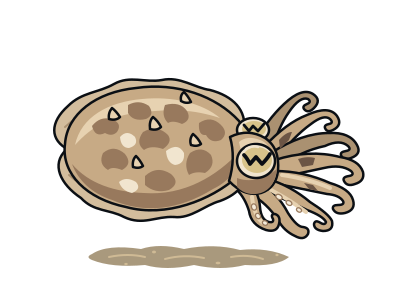
A species
Common cuttlefish
Sepia officinalis
A colour-blind master of disguise
You and the common cuttlefish meet in the Two-sided animals branch, shown at about 580 million years ago (on 11 November, in a calendar from life's shared ancestor to today).
The common cuttlefish can change its colour, pattern and skin texture almost instantly. Yet tests suggest it is colour-blind. Its skin can become smooth or bumpy, helping it blend into its surroundings. Colour-changing skin does not mean colour-seeing eyes: these are different abilities, and exactly how they work together is still being studied.
Despite its name, this animal is not a fish. It belongs to the molluscs, alongside squid and octopuses. Its wider family also includes snails, slugs, clams and oysters. These animals look very different, but all belong to the same branch of animals without backbones.
Disguise is only part of its story. It hunts crabs, shrimp, fish and even other cuttlefish. Its changing skin patterns are not just for hiding, either. Displays also play a part when it courts a mate or meets a rival.
Eight plus two
It has eight arms and two longer feeding tentacles, which shoot forwards to seize prey.
A shell hidden inside
Its chalky cuttlebone is an internal shell, not a backbone. Gas inside helps it control how it floats.
An inky escape
Like its octopus relatives, it can release a cloud of ink when threatened.