A group of living things
Crocodilians
Crocodylia
Armoured survivors of the asteroid.
This branch is shown at about 90 million years ago; its age is a rough estimate.
You and crocodilians meet in the Amniotes branch, shown at about 320 million years ago (on 4 December, in a calendar from life's shared ancestor to today).
Crocodiles, alligators and gharials are armoured survivors. Their ancestors lived through the asteroid-driven extinction about 66 million years ago, when all dinosaurs except birds disappeared. Here is the family surprise: birds are crocodilians’ closest living relatives. A crocodile is more closely related to a bird than to a lizard, but it is not itself a dinosaur.
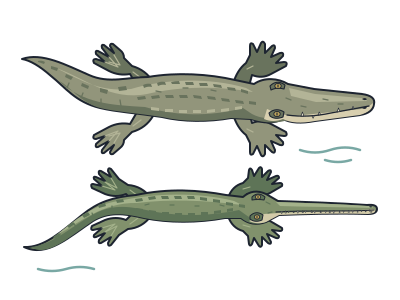
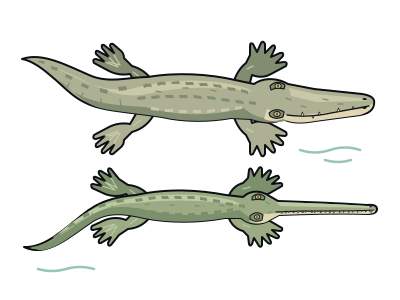
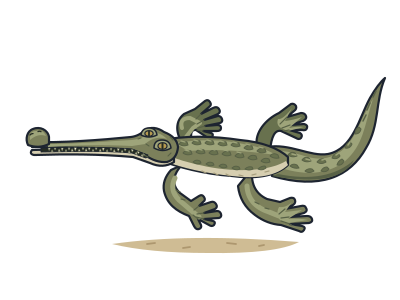
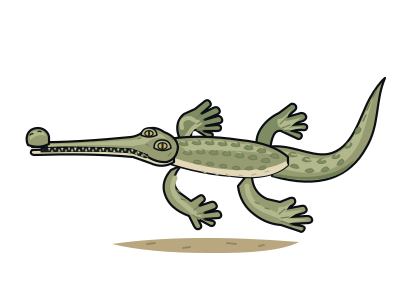
The armour is more than thick scales: it includes real bony plates set into the skin. Yet these relatives do not all look alike. Compare a heavy-bodied saltwater crocodile with a gharial’s long, pencil-thin jaws. Adult gharials mainly eat fish, using narrow jaws and interlocking teeth to catch slippery prey.
Water connects their lives, but different members use different places. Saltwater crocodiles live in freshwater as well as coastal waters. Gharials live in large rivers, with remaining populations in India and Nepal. Sandy banks give them places to warm in the sun and lay eggs.
The biggest living reptile
The saltwater crocodile is the largest living reptile.
A buzzing snout
Mature male gharials grow a rounded swelling at the tip of the snout. It helps them make buzzing calls and signal to females.
Warm nests matter
Nest temperature influences whether developing crocodilian hatchlings become male or female.
Inside crocodilians
- Nile crocodileA caring parent that carries its hatchlings gently in jaws that can crush bone.
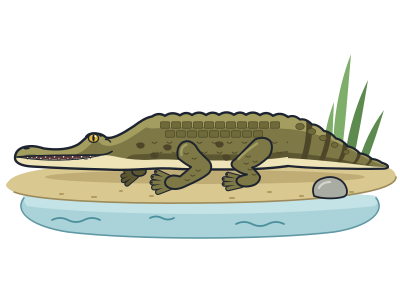
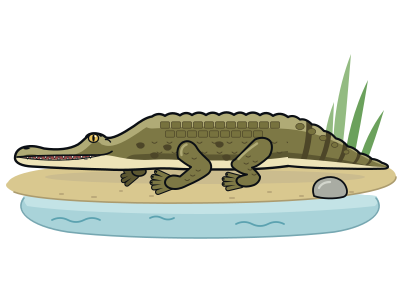
- GharialA narrow-snouted fish-catcher; males grow a pot-shaped knob on their nose.
- Saltwater crocodileThe largest living reptile, able to cross open sea between islands.
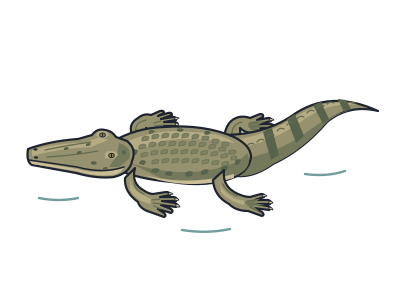
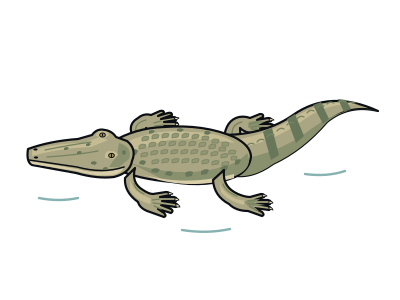
- DeinosuchusA giant fossil crocodile relative with banana-length teeth; bite marks show it fed on dinosaurs.
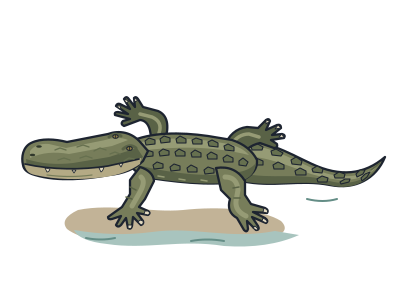
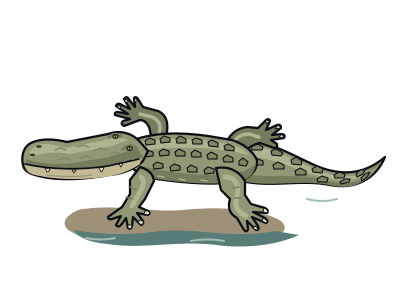
- Alligators and caimansBroad-snouted crocodilians of the Americas and China, whose lower teeth hide when the mouth shuts.
- False gharialIts name says false, but DNA shows it really is the gharial's closest cousin.
- Dwarf crocodileThe smallest crocodile, a heavily armoured forest dweller of West and Central Africa.
Next to it on the tree
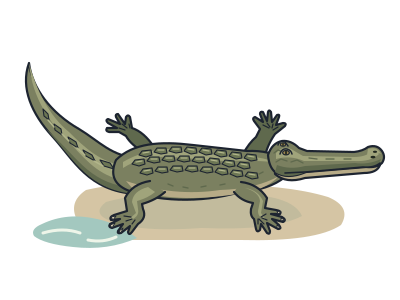
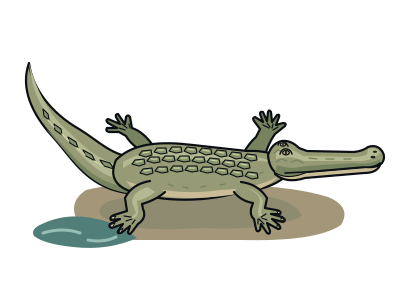
- SuperCrocA giant crocodile relative with a long swollen-tipped snout, known from Cretaceous African river deposits.
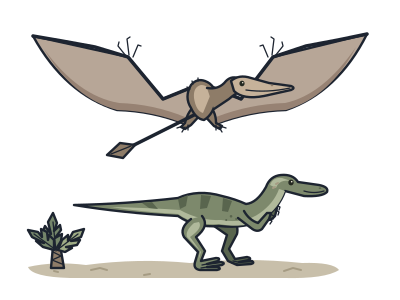
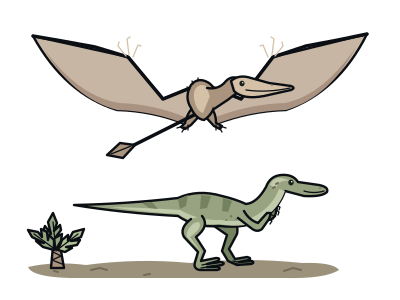
- Pterosaurs and dinosaursThe flying reptiles were the closest cousins of the dinosaurs.
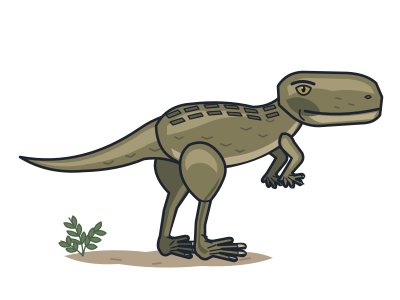
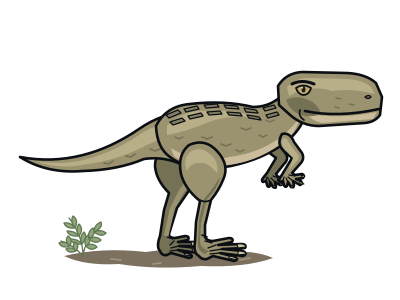
- PostosuchusA Triassic crocodile-line predator that walked tall, filling the role of later big theropods.