An extinct species
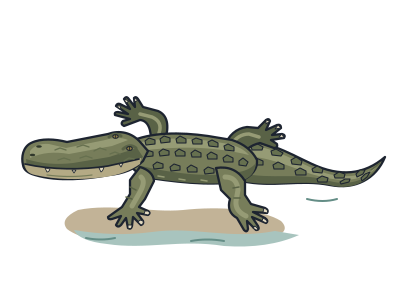
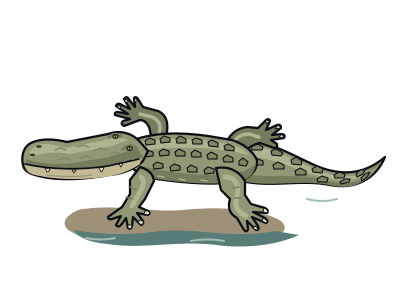
Deinosuchus †
Deinosuchus riograndensis
A giant crocodile relative that ate dinosaurs
Lived about 83.6–72.2 million years ago.
You and the deinosuchus meet in the Amniotes branch, shown at about 320 million years ago (on 4 December, in a calendar from life's shared ancestor to today).
This giant relative of living crocodiles and alligators ate dinosaurs—but was not a dinosaur itself. A 2025 study estimated one well-preserved individual at about 8 metres long, roughly the length of a small bus. Larger fossils were known. Some teeth were about 15 centimetres long: the length of a small banana, not its shape. Its fossils came from the Campanian, a part of the Late Cretaceous spanning about 84 to 72 million years ago.
Its home lay in western North America, including what became Texas and northern Mexico. A shallow inland sea divided the continent into eastern and western landmasses. It occupied rivers, coastal swamps and river mouths where fresh water met the sea.
Fossil skulls, teeth, bones and bony skin plates helped researchers reconstruct its body. Dinosaur bones from Big Bend carried distinctive crocodile-like bite marks, supporting the conclusion that it ate dinosaurs. Those marks did not show whether it caught those animals alive or fed on them after they died.
A puzzling nose
Two large extra openings pierced the bones near its snout tip, beside the opening for its nostrils. Their purpose remained unknown.
Growing for longer
A 1999 study of growth rings in its bony skin plates suggested that it became huge by growing for longer, rather than simply growing exceptionally fast.
Two routes to giant size
Its giant size evolved separately from that of Purussaurus, an enormous South American caiman on the alligator side of the family.
Next to it on the tree
- Nile crocodileA caring parent that carries its hatchlings gently in jaws that can crush bone.
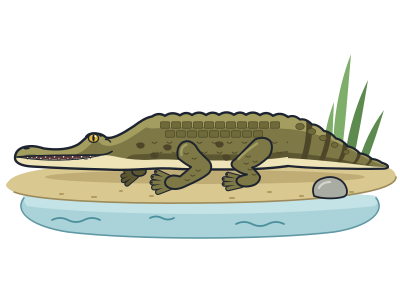
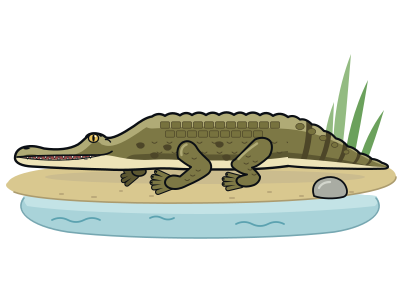
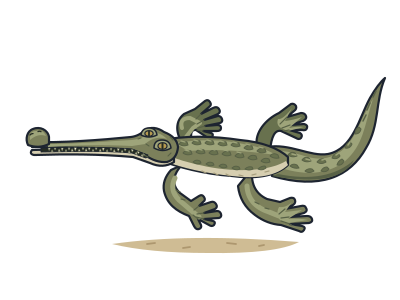
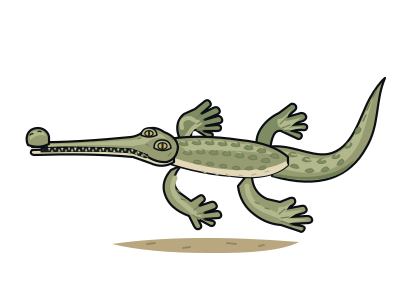
- GharialA narrow-snouted fish-catcher; males grow a pot-shaped knob on their nose.
- Saltwater crocodileThe largest living reptile, able to cross open sea between islands.
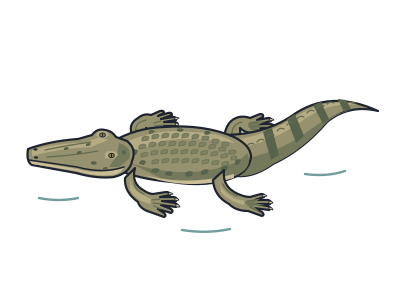
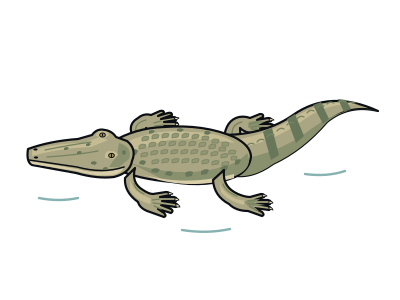
- Alligators and caimansBroad-snouted crocodilians of the Americas and China, whose lower teeth hide when the mouth shuts.
- False gharialIts name says false, but DNA shows it really is the gharial's closest cousin.
- Dwarf crocodileThe smallest crocodile, a heavily armoured forest dweller of West and Central Africa.