A species
Saltwater crocodile
Crocodylus porosus
The largest living reptile can travel between islands.
You and the saltwater crocodile meet in the Amniotes branch, shown at about 320 million years ago (on 4 December, in a calendar from life's shared ancestor to today).
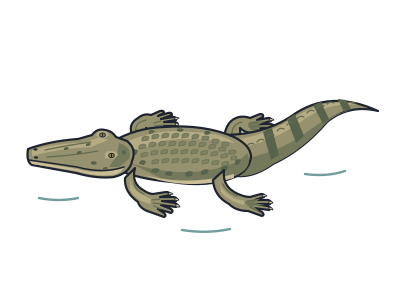
The saltwater crocodile is the largest living reptile, and it can cross open sea between islands. Tracked crocodiles have travelled with favourable surface currents rather than swimming against the flow. One male covered about 590 kilometres along the coast in 25 days. Another waited in a sheltered bay for four days before continuing when the currents helped it along.
Its family connection may be even more surprising than its sea journeys. Crocodiles, alligators, caimans and gharials together form the closest living group to birds outside birds themselves. But crocodiles are not dinosaurs.
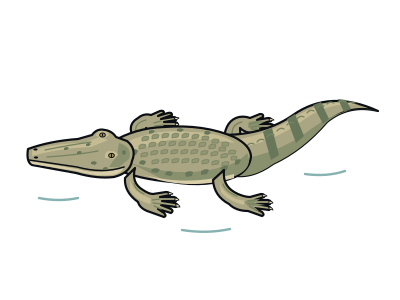
A long, heavy body, broad snout and muscular tail give this traveller its familiar shape. Raised bony plates armour its back. Adults can be golden tan, grey or almost black, with darker mottling and a cream belly. Young crocodiles have stronger dark spots and bands.
A careful mother
The mother guards her nest. Calls from her young prompt her to dig them out and carry them to water in her mouth.
Finding the way home
Crocodiles moved to another river system can return to their original territory.
Protection helped
Heavy hunting greatly reduced Australian populations. Protection introduced during the 1970s helped their numbers recover.
Next to it on the tree
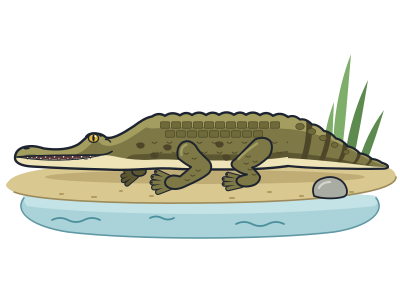
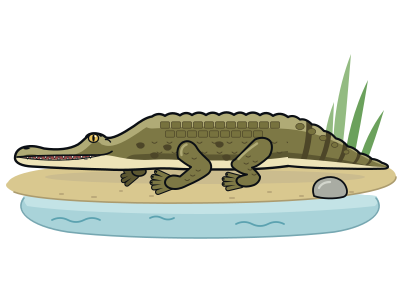
- Nile crocodileA caring parent that carries its hatchlings gently in jaws that can crush bone.
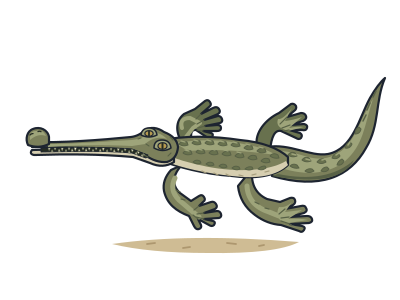
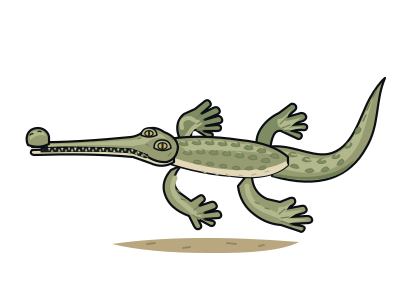
- GharialA narrow-snouted fish-catcher; males grow a pot-shaped knob on their nose.
- DeinosuchusA giant fossil crocodile relative with banana-length teeth; bite marks show it fed on dinosaurs.
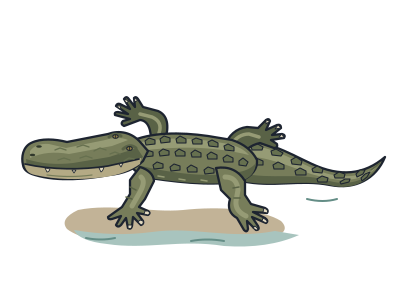
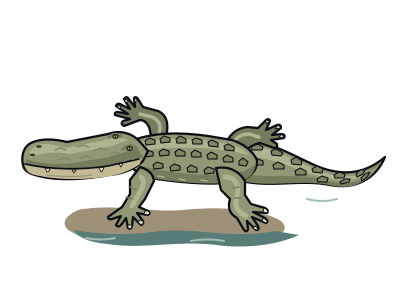
- Alligators and caimansBroad-snouted crocodilians of the Americas and China, whose lower teeth hide when the mouth shuts.
- False gharialIts name says false, but DNA shows it really is the gharial's closest cousin.
- Dwarf crocodileThe smallest crocodile, a heavily armoured forest dweller of West and Central Africa.