An extinct species
SuperCroc †
Sarcosuchus imperator
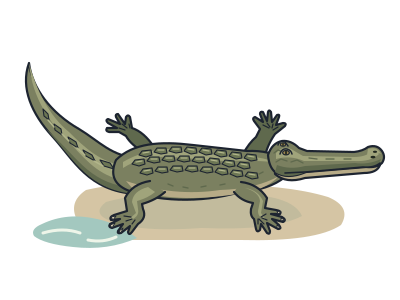
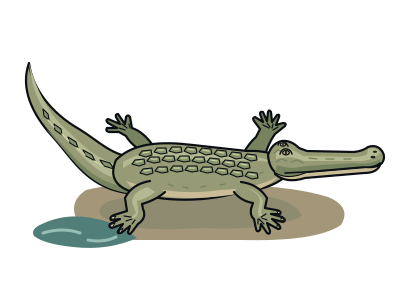
A giant crocodile relative with a swollen-tipped snout
Lived about 121.4–100.5 million years ago.
You and the supercroc meet in the Amniotes branch, shown at about 320 million years ago (on 4 December, in a calendar from life's shared ancestor to today).
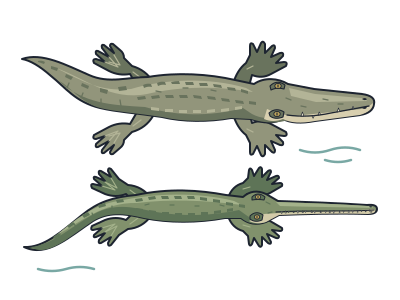
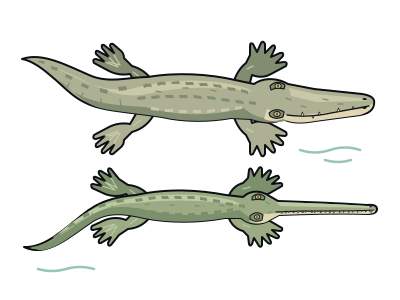
SuperCroc was a giant crocodile relative with a long, swollen-tipped snout. It was not a dinosaur. It belonged to an extinct branch outside the group containing all living crocodilians. It was not simply a modern crocodile enlarged to giant size. An early study estimated a large individual at about 11–12 metres long—roughly bus-length. A later model suggested about 9 metres instead.
Its well-studied Niger fossils came from Early Cretaceous river deposits, in what is now the Sahara. The two geological stages used to date these rocks together spanned about 121 to 101 million years ago. This was a broad age guide, not evidence that the species lived throughout that interval.
Fossil skulls showed a snout that made up about three-quarters of the skull’s length. In adults, it was broader and sturdier than in youngsters, with a rounded bony swelling at the tip. Rows of partly overlapping bony plates armoured its back. These preserved bones revealed its build; its colour and detailed behaviour remained unknown.
A crowded mouth
Its jaws carried about 130 teeth.
A noticeable overbite
Its upper jaw extended beyond its lower jaw.
Eyes above the water
Its upward-facing eye sockets suggested it could watch above the surface while much of its body stayed underwater.