A species
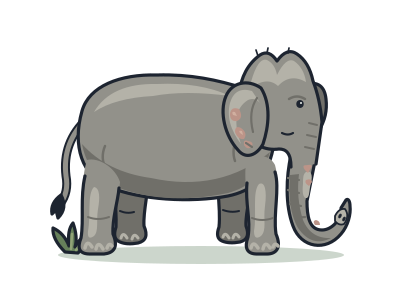
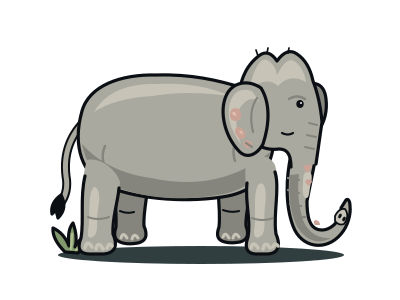
Asian elephant
Elephas maximus
Small ears, with a mammoth family connection.
You and the asian elephant meet in the Placental mammals branch, shown at about 95 million years ago (on 23 December, in a calendar from life's shared ancestor to today).
Asian elephants have smaller ears than African elephants—and a surprising family connection. The Asian elephant is the closest living relative of mammoths, including the woolly mammoth. But it did not descend from them. Mammoths and living elephants are cousins on separate branches of the same elephant family.
Its trunk combines its nose and upper lip, with no bones inside. At the end is one finger-like projection; African elephants have two. Not every Asian elephant has large tusks. Only some males grow the long, visible kind. Females and some males may have tiny tusks that barely stick out.
Females live in family herds, where related females help raise the young and protect the group. Males spend much of their lives alone or in male groups. Their plant menu includes grasses, leaves, fruit, bark and roots. When drinking, an elephant draws water into its trunk, then pours it into its mouth—not straight into its stomach.
Conveyor-belt teeth
New grinding teeth move forwards from the back of the jaw to replace worn ones, like a conveyor belt.
Cooling ears
Flapping the ears helps cool the blood flowing through them.
Rumbles beyond our hearing
Low rumbles carry messages over long distances. Some of these sounds are too low for people to hear.
Next to it on the tree
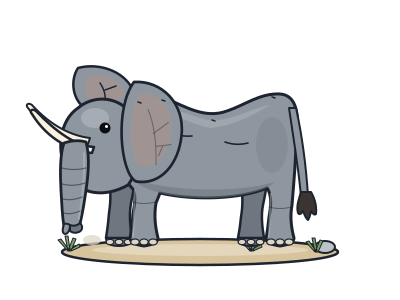
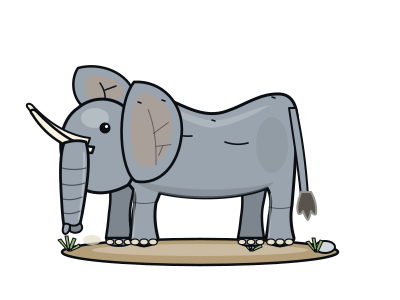
- African bush elephantThe largest land animal; its nearest living relatives include manatees and hyraxes.
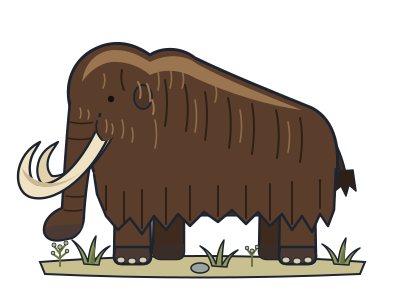
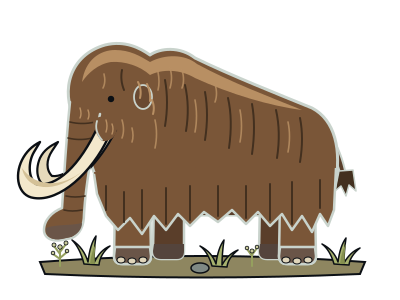
- Woolly mammothA shaggy ice-age elephant; a few survived on an Arctic island until the pyramids were built.
- African forest elephantA smaller elephant with straighter tusks, recognised as a separate species from the bush elephant.
- Columbian mammothA mammoth taller than African elephants that lived in warmer North America, not the frozen north.
- Sicilian dwarf elephantAn island elephant less than a metre tall, about the size of a large dog.