A species
Water flea
Daphnia magna
A see-through pond crustacean with a heart you can watch beating.
You and the water flea meet in the Two-sided animals branch, shown at about 580 million years ago (on 11 November, in a calendar from life's shared ancestor to today).
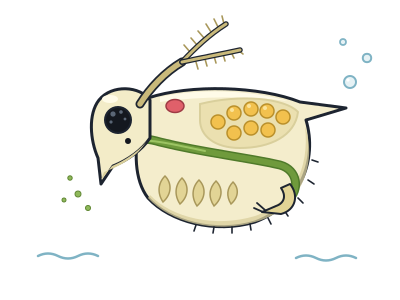
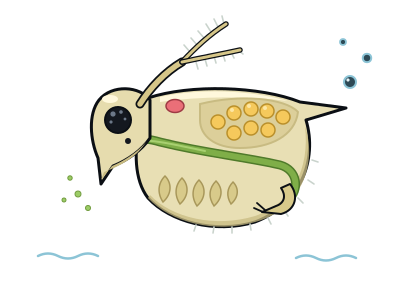
Put a water flea under a microscope and you can watch its heart beat. Its shell is see-through, so you can spot the small oval heart just behind the head, pumping blood. You can also see the gut, often green or brown with food. Scientists and students can study a living animal this way without harming it.
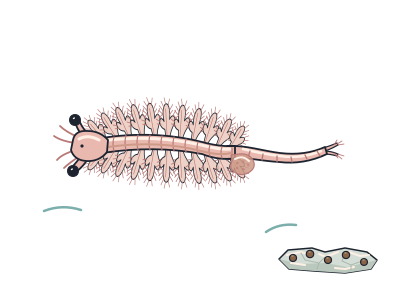
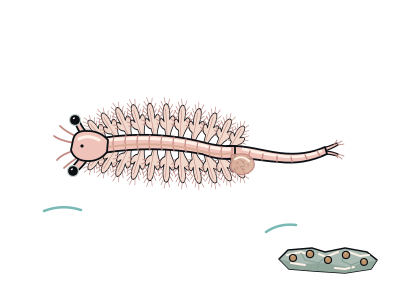
Despite its name, it is not an insect or a true flea. It is a crustacean, a relative of shrimps and crabs, and it belongs to the same crustacean group as fairy shrimps. The 'flea' part of the name comes from its jerky, hopping swim. It rows through the water with a big pair of feathery antennae that work like oars. Females grow up to about 5 mm long, about the size of a grain of rice. Males reach only about 2 mm.
It lives in ponds, lakes and rock pools, mainly across the Northern Hemisphere. Inside the shell, five pairs of leaf-like legs beat all the time, pulling in water and filtering out tiny algae and bacteria to eat. For most of the season, females make copies of themselves without any males. They carry the eggs in a pouch on their back, where you can see the young growing.
Turning pink
In water with little oxygen, these water fleas make extra haemoglobin, the red substance that carries oxygen. Because their shell is clear, they turn visibly pink or red.
Tough survival eggs
When times get hard, males appear and the water fleas make special resting eggs inside a protective case. These eggs can survive being frozen or dried out.
One big eye
A water flea has a single large eye in the middle of its head, made from two eyes joined together. It also has a tiny extra eyespot.