A species
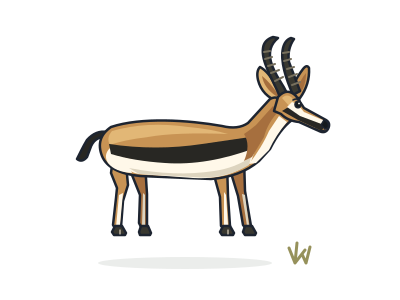
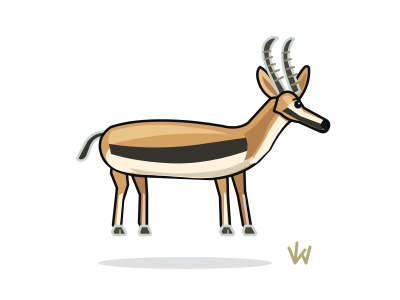
Thomson's gazelle
Eudorcas thomsonii
A small, fast antelope with a stiff-legged bounce.
You and the thomson's gazelle meet in the Placental mammals branch, shown at about 95 million years ago (on 23 December, in a calendar from life's shared ancestor to today).
Thomson's gazelle can respond to danger with a high bounce, lifting all four feet off the ground together and holding its legs stiff. This display is called stotting. Despite its slender build, this small antelope belongs to the same family as cattle, sheep and goats. Heavy bison and buffalo are family relatives too.
Its sandy to reddish-brown back contrasts with a white belly and a bold black stripe along each side. White stripes also run from its eyes towards its nose, bordered below by black. Like other gazelles, it runs on its toes: its hooves are modified toenails.
Short grasslands provide much of its food. It mainly eats grass, but also takes seeds and food from shrubs. Larger neighbours can help prepare its meals. Wildebeest and zebras graze and trample the vegetation, making short grass easier for the gazelle to reach.
Not matching horns
Males have ridged, backward-curving horns. Females may have much smaller horns or none.
Changing company
Herds split and join readily. A gazelle does not belong to one permanent group.
Less room to roam
Farming, settlements and roads reduce its habitat. Hunting is another threat.
Next to it on the tree
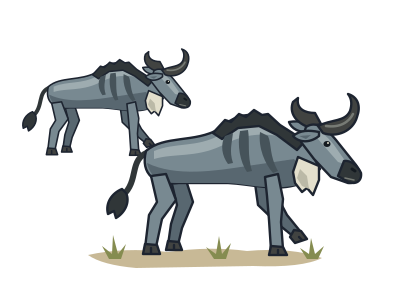
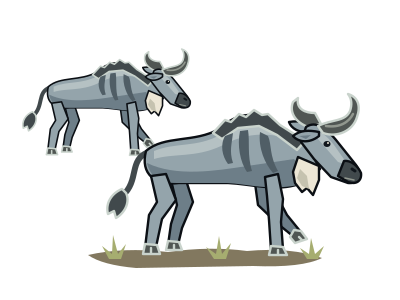
- Blue wildebeestOver a million of them loop around the Serengeti each year in one of the greatest migrations on land.
- Cattle, buffalo and spiral-horned antelopesWild cattle, buffalo and spiral-horned antelopes like the kudu and eland form one branch.
- Goats, sheep and muskoxenSure-footed climbers and cold-weather grazers, including the first animals farmers tamed.
- ImpalaA graceful antelope that can leap about three metres high when fleeing predators.
- SpringbokBounces straight up on stiff legs, called pronking, possibly to show predators it is fit.
- GemsbokA desert oryx with long straight horns that can go long periods without drinking.
- SaigaA steppe antelope with a bulbous, droopy nose that filters dust and warms cold air.