A species
Blue wildebeest
Connochaetes taurinus
A million travellers in a grassland loop
You and the blue wildebeest meet in the Placental mammals branch, shown at about 95 million years ago (on 23 December, in a calendar from life's shared ancestor to today).
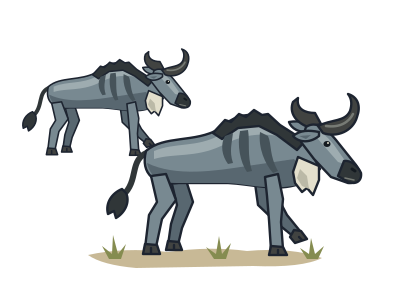
Over a million blue wildebeest loop around the Serengeti–Mara landscape each year, crossing Tanzania and Kenya in one of the greatest migrations on land. These travellers are antelopes, despite their cow-like build. They belong to the same wider family as cattle, bison, sheep, goats and gazelles.
Seasonal rain drives this movement by changing where fresh grass and water are available. The migrating herds use the southern short-grass plains during the rains. As conditions dry, they move west and north, then return south when rain returns. But this journey is not a rule for the whole species: some blue wildebeest populations stay in one area rather than migrate.
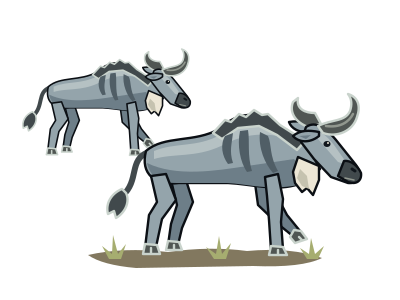
Look closely at an adult and its shape is striking: bulky shoulders and a slimmer rear end. Its coat can be bluish-grey or browner, with darker vertical stripes. A black mane runs along its neck. The name comes from a bluish sheen, not bright blue fur.
Quick on their feet
A newborn calf can stand and follow its mother within minutes of birth.
Finding mum by smell
Mothers and calves recognise one another by scent, helping them reunite as large herds move.
Feeding the grassland
Their dung and urine return nutrients to the grasslands where they feed.
Next to it on the tree
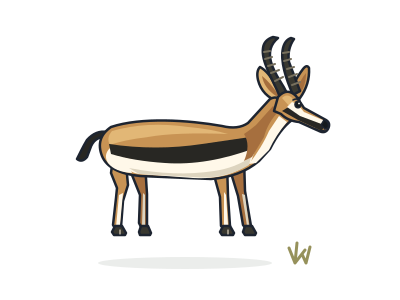
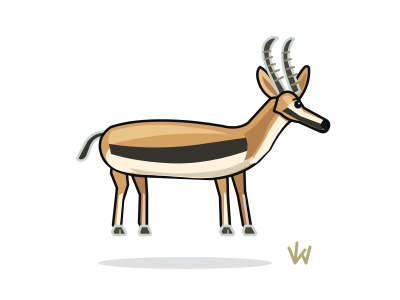
- Thomson's gazelleA small antelope that bounces on stiff legs; the display may advertise its escape ability.
- Cattle, buffalo and spiral-horned antelopesWild cattle, buffalo and spiral-horned antelopes like the kudu and eland form one branch.
- Goats, sheep and muskoxenSure-footed climbers and cold-weather grazers, including the first animals farmers tamed.
- ImpalaA graceful antelope that can leap about three metres high when fleeing predators.
- SpringbokBounces straight up on stiff legs, called pronking, possibly to show predators it is fit.
- GemsbokA desert oryx with long straight horns that can go long periods without drinking.
- SaigaA steppe antelope with a bulbous, droopy nose that filters dust and warms cold air.