A species
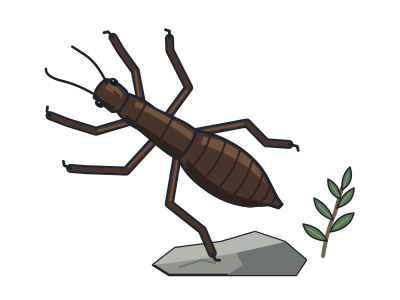
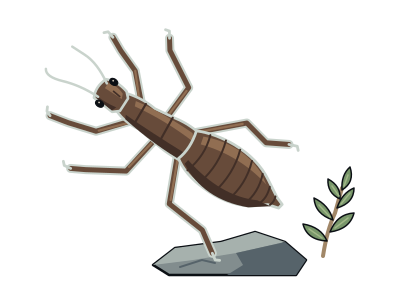
Lord Howe Island stick insect
Dryococelus australis
A lost insect, found on a tower of rock.
You and the lord howe island stick insect meet in the Two-sided animals branch, shown at about 580 million years ago (on 11 November, in a calendar from life's shared ancestor to today).
For about 80 years, people thought this insect was extinct. Then, in 2001, a night-time search found three alive around one tea-tree bush on Ball’s Pyramid, a steep volcanic sea stack. They were hidden survivors, not insects brought back from extinction. Despite the nickname ‘tree lobster’, this animal belongs with stick insects and leaf insects, not lobsters.
Black rats introduced after a shipwreck in 1918 caused its disappearance from Lord Howe Island. On Ball’s Pyramid, adults eat the tips of native tea-tree leaves. These large, sturdy insects have no wings and cannot fly. They feed at night and spend daylight hours sheltering among rocks, plants or hollows.
The single bush was the rediscovery site, not the whole story today. In March 2026, insects were reported at two more locations on Ball’s Pyramid. Finding more refuges is good news, but the species remains in serious danger of extinction.
A bigger second count
A return visit in 2002 found 24 insects at the rediscovery spot.
Green beginnings
Young insects start bright green and are active by day. As they grow, they darken and switch to night-time activity.
Young without mating
Females can produce young without mating. Eggs produced this way develop into females.
Next to it on the tree
- Timema walking stickA short, plain Californian stick insect from the line that branched first.
- Giant prickly stick insectA spiny Australian insect that curls its tail like a scorpion and whose eggs ants carry home.
- Indian stick insectThe classroom stick insect; nearly all are females that lay eggs without mating.
- Chan's megastickAmong the longest insects ever found, over half a metre with legs stretched out.
- Philippine leaf insectA flat green insect with leaf-like veins that even sways like a leaf in the breeze.
- Messel leaf insectA 47-million-year-old leaf insect from Germany that already looked like a leaf.