A species
Tiger pufferfish
Takifugu rubripes
A prickly balloon with a dangerous secret
You and the tiger pufferfish meet in the Bony fish and their descendants branch, shown at about 430 million years ago (on 24 November, in a calendar from life's shared ancestor to today).
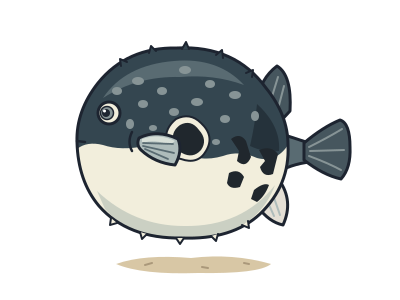
The tiger pufferfish can become a prickly ball and carry a deadly poison—yet it is also served as fugu in Japan. Its relatives include the enormous ocean sunfish shown beside it on the tree. They belong to the same wider group of fish, along with triggerfishes and boxfishes, but not to the same family.
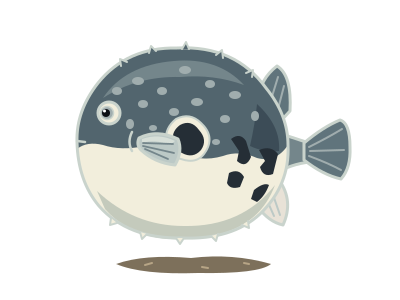
When threatened, it pumps water into its stretchy stomach. Its body swells into an almost round ball, making it harder for a predator to swallow. Underwater, it fills with water rather than air. Small prickles cover its back and belly; it does not have the long spikes of a porcupinefish.
Its other defence is a poison called tetrodotoxin, which can be deadly if eaten. It is poisonous, rather than a fish that injects venom through its prickles. In Japan, preparing fugu is restricted to specialist handlers authorised by the responsible authorities—not something to try at home.
Four-toothed bite
Its front teeth are fused into a beak, with two sections above and two below, for crushing hard-shelled food.
Sticky eggs
Its eggs stick to objects on the seabed.
A useful identification mark
Look for a large black blotch with a pale border just behind each side fin.
Next to it on the tree
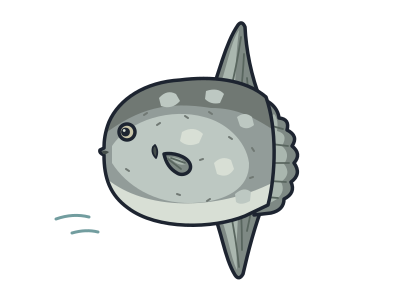
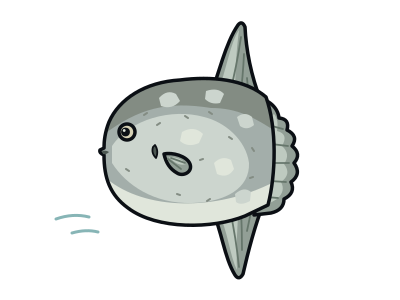
- Ocean sunfishOne of the heaviest bony fish, a giant swimming head that can weigh over two tonnes.
- Long-spine porcupinefishIts spines lie flat until it gulps water and swells into a spiky ball.
- Picasso triggerfishLooks like a painting, and locks its back spine upright to wedge itself into reef holes.
- Yellow boxfishA spotted yellow cube in bony armour, whose shape inspired a car design.